
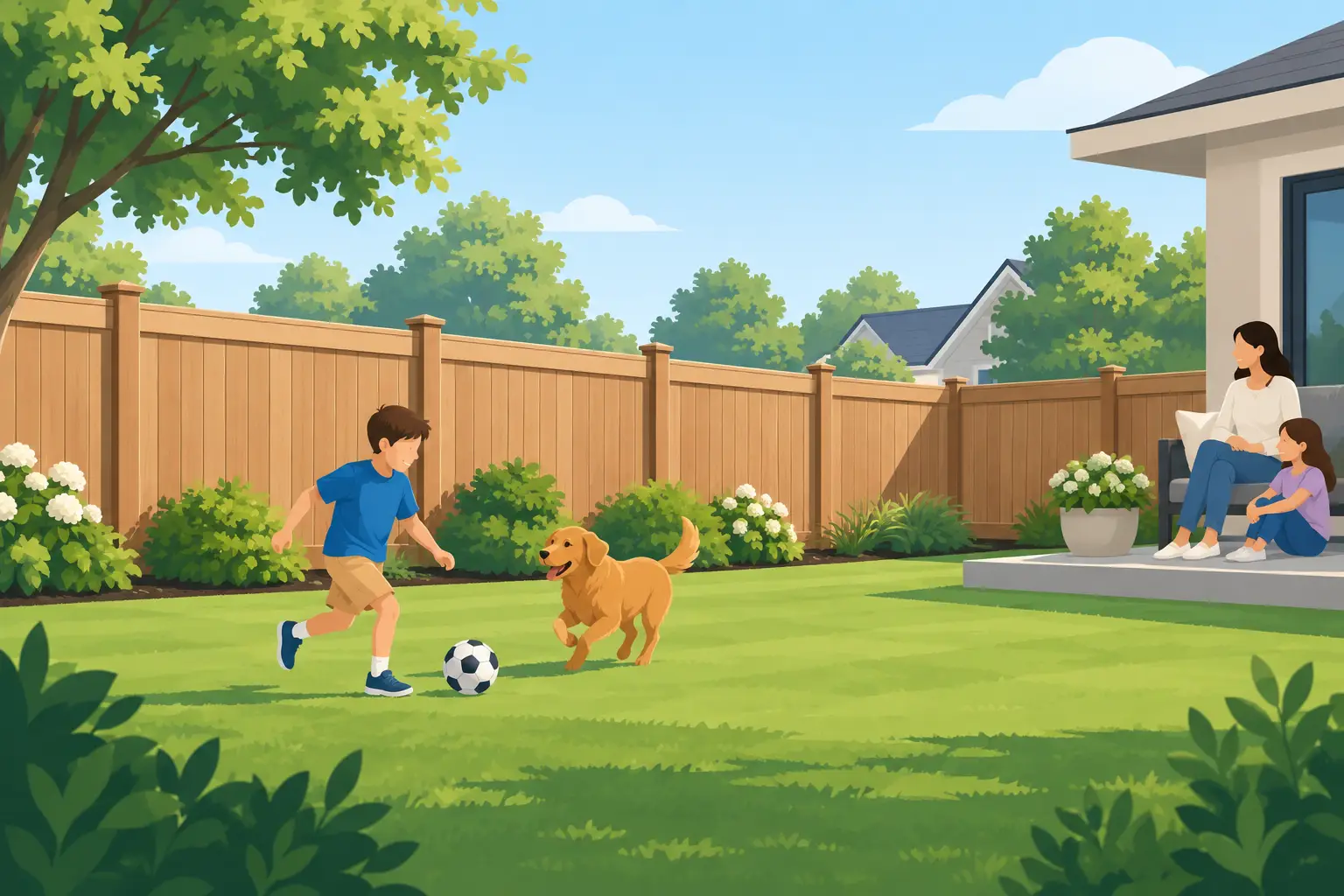
A backyard changes the moment it becomes a place where children can run, a dog can play, and adults can relax without watching every step. Family friendly backyard fencing creates that separation between your household and the street, neighboring properties, wooded edges, and other hazards. The right fence should feel secure without making your yard feel closed in, and it should continue doing its job through New Jersey rain, summer humidity, winter freeze-thaw cycles, and years of daily use.
For many homeowners, the decision starts with privacy. But a family-focused fence needs to do more than block a view. It needs dependable gates, safe spacing, durable materials, and an installation that respects the property line. Those details are what turn a good-looking fence into a reliable part of your home.
Start with How Your Family Uses the Yard
Before choosing a material or style, think about the situations your fence needs to handle. A family with a young child may need a secure enclosure with self-closing gate hardware. A pet owner may be more concerned about gaps below the fence, gate latches, and a height that prevents jumping. Homeowners who entertain often may want privacy from close neighbors while still keeping an open, welcoming look along the front or side yard.
The most practical choice is rarely one-size-fits-all. A six-foot privacy fence can create a quiet backyard retreat, but it may not be necessary around every side of the property. An aluminum fence can preserve sightlines toward a garden or play area, while a solid vinyl or cedar fence may make more sense where privacy is the priority. Combining styles can give a property the function it needs without overbuilding it.
It is also smart to think ahead. A small playset today may become a basketball hoop, patio, pool, garden, or dog run in a few years. Planning gate locations and fence lines around future improvements can save time and expense later.
Choosing Family Friendly Backyard Fencing Materials
The best fencing material depends on your budget, maintenance expectations, desired privacy, and the character of your home. Every option has strengths, and a trusted local installer can help match those strengths to your property.
Vinyl for Low-Maintenance Privacy
Vinyl fencing is a popular choice for families who want a clean, finished appearance without routine painting or staining. Privacy panels provide strong visual separation, and the smooth surface has no splinters or exposed nails to worry about around active children and pets. Vinyl is also available in several colors and styles, from full privacy panels to more decorative picket designs.
The trade-off is that vinyl requires professional installation and properly set posts to perform well over time. A poorly installed vinyl fence can shift or rack under weather pressure. Quality materials and solid post setting matter, especially in yards with exposed wind or uneven grades.
Wood and Cedar for a Natural Look
Wood fencing remains a favorite across New Jersey because it is versatile, warm, and easy to customize. A solid wood privacy fence can provide excellent screening, while picket and post-and-rail styles offer a more open feel. Cedar is especially valued for its natural beauty and resistance to decay, while pressure-treated pine can be a cost-conscious option for homeowners who plan to maintain it.
Wood does require attention. Staining, sealing, and occasional repairs help protect it from moisture, sun exposure, and seasonal movement. For families, the key is keeping boards smooth, hardware secure, and damaged sections addressed before they become a snag, splinter, or loose panel.
Aluminum for Visibility and Security
Aluminum fencing is an excellent fit when you need a clear boundary without blocking the view. It is often used around pools, patios, gardens, and sloped yards because it can follow changes in grade gracefully. Its powder-coated finish provides a polished look with minimal maintenance, and the narrow picket spacing helps create a secure perimeter.
Because aluminum is open-style fencing, it does not provide privacy on its own. Many homeowners use it in rear areas where visibility matters, then choose vinyl or wood along property lines that need more screening.
Composite and Trex for Long-Term Curb Appeal
Composite fencing offers a premium option for homeowners who want the appearance of wood with less ongoing maintenance. It can be a strong choice for privacy-focused backyards and modern outdoor living spaces. Composite materials are built to resist rot, insects, and many of the maintenance concerns associated with traditional wood.
Upfront cost is typically higher, so it makes the most sense for homeowners who value long-term appearance and plan to stay in the home for years. The right installation is particularly important because composite systems use specialized components and need careful layout.
Chain Link When Function Comes First
Chain link fencing is practical, durable, and often one of the most affordable ways to contain pets and define a large yard. It is a dependable option for dog runs, side yards, and areas where visibility is useful. Privacy slats can be added if screening becomes more important, though they will not create the same solid look as vinyl or wood.
For pet owners, chain link is only as secure as its details. The bottom should be properly secured where digging is a concern, and gates should have reliable latches that cannot be pushed open easily.
Safety Details That Deserve Real Attention
Fence safety is not just about height. It is about the small construction choices that hold up to everyday family life. Gates should swing and latch correctly, with hardware installed at an appropriate height for the household. A gate that drags across the ground or needs to be forced shut is more than an inconvenience. It can become the weak point in an otherwise secure yard.
Spacing matters too. Open-style fences should not have gaps that allow small pets to squeeze through or invite climbing. Solid privacy fences should have smooth, secure boards with fasteners installed properly. If the yard is on a slope, the fence design should follow the grade without leaving oversized openings underneath.
Pool areas require additional care. New Jersey pool fencing requirements can vary by municipality and project conditions, so homeowners should not assume a standard backyard fence meets every safety rule. Height, gate operation, latch placement, and clearance are all important. A professional fence contractor can help plan a pool barrier that supports safety, code compliance, and the look of the property.
Put Gates Where They Make Daily Life Easier
A well-placed gate can make yard work, trash day, pet care, and family gatherings much easier. Many homeowners benefit from a wider double gate for lawn equipment or future access to a patio project. A standard walk gate near the driveway or side entrance gives kids and adults a convenient route without opening the main backyard area.
Think about how the gate will operate in real life. Will snow pile up where it swings? Does it open toward a busy driveway? Is there enough room to bring in a grill, wheelbarrow, or mower? These are simple questions, but they are easier to answer before posts are set in concrete.
Custom gate work can be especially valuable on unusual lots, between a home and garage, or where standard gate sizes leave awkward gaps. A gate should match the fence, close securely, and feel solid every time it is used.
Protect the Property Line Before Installation
One of the most common avoidable problems with backyard fencing is building based on assumptions about the property line. Existing fences, landscaping, and conversations with neighbors can be helpful clues, but they are not always accurate. When there is uncertainty, a survey or confirmation of the boundary is worth the effort.
Homeowners should also check local permit requirements, homeowner association rules, and any restrictions affecting height or placement. Rules may differ between municipalities and can apply differently to front yards, corner lots, pools, and fences near sidewalks. Clear planning prevents delays and helps protect the investment.
Talking with neighbors before work begins is also a practical courtesy. It gives them a clear understanding of the timeline and helps avoid surprises around shared boundaries. A professionally planned installation should create a clean result on your property without creating unnecessary tension next door.
Choose Installation Quality Over Shortcuts
Even the best fence material will not perform well if the posts are shallow, the layout is uneven, or the gates are rushed. Professional installation starts with accurate measuring and layout, then uses proper post depth, secure footings, straight lines, and careful finishing. Those basics determine whether a fence still looks and functions properly after years of wind, weather, and family activity.
For homeowners in Middlesex County, Union County, and surrounding New Jersey communities, local experience matters. Soil conditions, lot layouts, municipal expectations, and seasonal weather all influence the work. Northeast Fencing, LLC helps homeowners choose materials and designs that fit their family, their property, and their budget, with dependable workmanship from quote through installation.
A fence should give your family more freedom to enjoy the backyard, not another project to worry about. Choose a design that fits the way you live now, leave room for how life may change, and make sure every post, panel, and gate is built to hold up when it matters.