
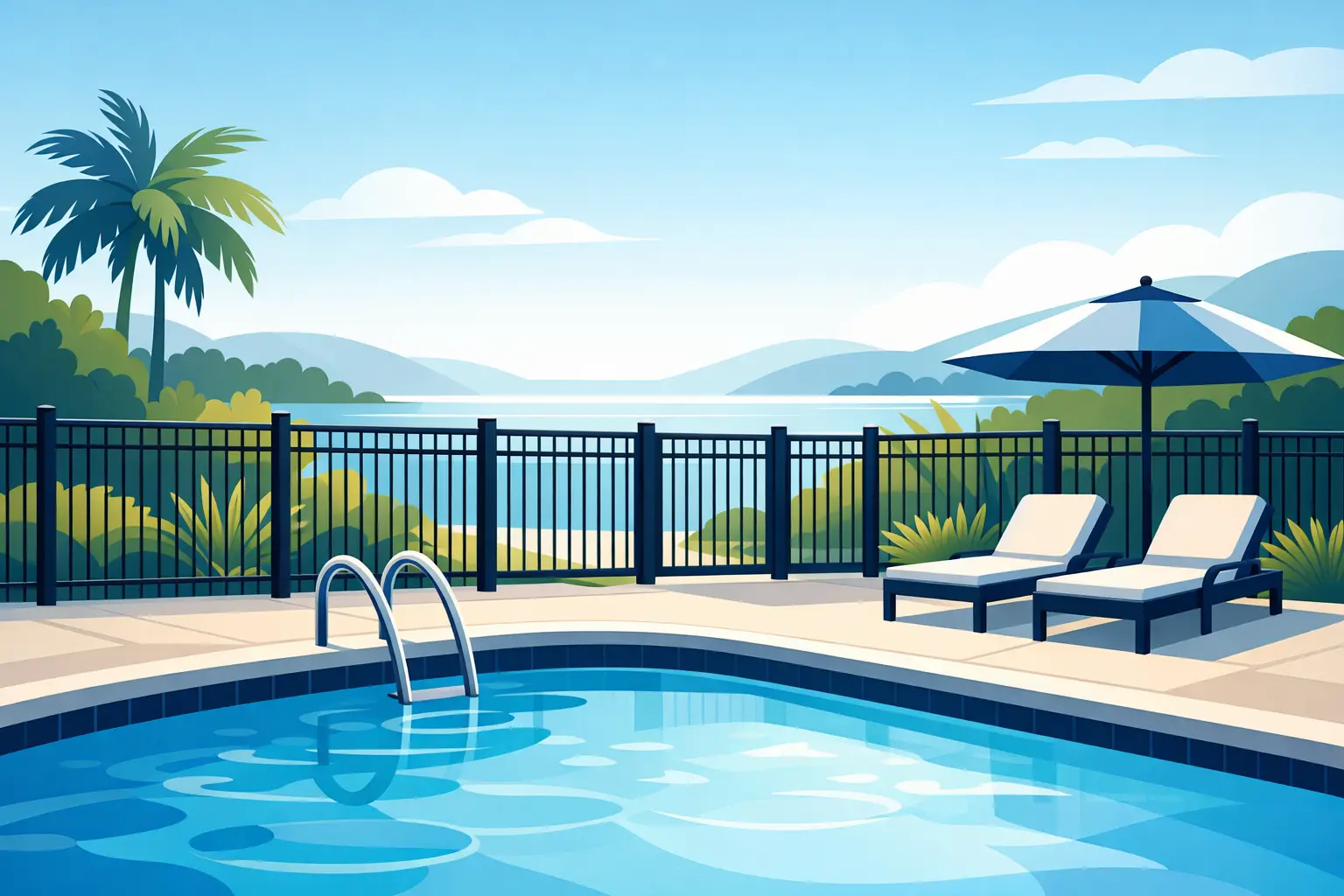
A pool fence has one job that rises above every other consideration: creating a dependable barrier between the water and the people who should not access it alone. An aluminum fence for pool areas is a popular choice for New Jersey homeowners because it delivers that protection without making the backyard feel closed in. You can still see the pool, keep an eye on children and guests, and preserve the open look that makes a pool area enjoyable.
For many families, aluminum is the practical middle ground between a heavy, high-cost ornamental metal fence and a privacy fence that blocks every view. It is clean, durable, and available in styles that work with everything from a new patio in Edison to a traditional backyard in Woodbridge or Colonia. The right result, however, depends on more than choosing a panel from a catalog. Fence height, gate operation, layout, local requirements, and installation quality all matter.
Why an Aluminum Fence for Pool Areas Makes Sense
Aluminum fencing is built for exposure. It does not rust the way untreated steel can, and its powder-coated finish stands up well to rain, humidity, pool splashing, and changing New Jersey seasons. That matters around pools, where moisture is constant and a fence needs to look good without becoming a recurring maintenance project.
The open-picket design is another major advantage. A solid vinyl or wood fence can provide privacy, but it can also block sightlines to the water. With aluminum, adults can monitor activity from the patio, kitchen window, or seating area more easily. That visibility is not a replacement for supervision, but it is a meaningful part of a safer pool environment.
Aluminum also brings a more finished appearance than many basic pool barriers. Black is the most requested color because it tends to fade into the landscape and let the pool, hardscape, and plantings stand out. Bronze and other finishes may be a better match for certain homes, decks, or existing railings. Decorative post caps, arched gates, and ornamental details can add character without taking attention away from the pool itself.
Safety Starts with the Layout, Not the Fence Panel
A quality aluminum panel is only part of a functional pool enclosure. The layout must create a true barrier around the pool area, with no convenient opening through a side yard, between a house and fence line, or around equipment access. This is where a professional site visit is valuable. Slopes, retaining walls, patios, sheds, and existing fences often create conditions that are easy to overlook on paper.
Pool fencing requirements can vary by municipality, property conditions, and the type of pool. Homeowners should verify the current local code and permit requirements before work begins. In general, inspectors focus on the barrier height, the space below and between fence components, whether the design is climbable, and how gates operate. Requirements may also apply to the pool itself, alarms, doors that provide direct access, and other safety features.
The Gate Deserves Extra Attention
The pool gate is the part of the fence used most often, so it should never be an afterthought. A properly designed pool gate typically needs to self-close and self-latch, with the latch positioned to discourage access by young children. The gate swing direction, hinge tension, latch placement, and clearance at the ground should all be evaluated during installation.
A gate that looks square on installation day but drags or fails to latch a year later is not acceptable around a pool. Properly set posts and quality hardware help prevent that problem. If the gate crosses a sloped surface or connects to a masonry patio, the installer may need to adjust the design rather than force a standard gate into a layout that will not work well.
Choosing the Right Height and Style
Many homeowners want the lowest-profile fence that still meets applicable safety standards and looks right with the yard. The best height depends on local requirements and the property layout, but a taller fence may make sense when the yard backs up to a busy area, has significant grade changes, or needs more separation from neighboring properties.
Standard flat-top aluminum fencing has a crisp, understated appearance and works well in contemporary or traditional yards. Spear-top styles offer a more formal look, though they may not be the best fit for every pool setting. For a softer design, homeowners can choose an arched gate or decorative accents while keeping the main fence line simple.
Picket spacing also deserves consideration. An aluminum pool fence should be designed to discourage children from squeezing through or climbing it. Horizontal rails can create a ladder-like effect in some configurations, which is why the specific style should be reviewed with pool safety in mind instead of selected strictly for appearance.
Aluminum vs. Other Pool Fence Materials
There is no single best pool fence for every home. Aluminum is often the right choice when visibility, low maintenance, and curb appeal are priorities. It is not the best choice when complete privacy is the main goal.
Vinyl fencing can create a private pool retreat and requires little routine upkeep, but it blocks visibility and can feel more enclosed. Wood offers a warm, classic look and excellent privacy, although it needs periodic staining, sealing, or repair to stay in good condition. Chain link is typically a cost-conscious choice and can be effective for containment, but many homeowners prefer aluminum for a more polished residential appearance.
Ornamental iron offers substantial weight and a traditional high-end feel, but it usually costs more and may require more maintenance over time. Aluminum captures a similar open, ornamental look at a more approachable price point for many homeowners. The trade-off is that aluminum is lighter and may not be the ideal material for applications requiring the highest level of perimeter security.
Installation Details That Protect Your Investment
Even the best aluminum fence will underperform if it is installed without careful planning. Posts need to be set at the correct depth and spacing, particularly in areas with uneven grade. Panels should follow the slope in a way that avoids large gaps under the fence while maintaining an orderly appearance. Where a fence meets a patio, deck, wall, or existing structure, those transitions need special attention.
Pool equipment access is another detail worth planning early. Pumps, filters, heaters, and utility areas may need to remain accessible for service. A well-planned gate can provide access without creating an unnecessary weak point in the pool barrier. Homeowners should also consider where furniture, grills, and planters will sit. Keeping climbable objects away from the fence helps maintain the purpose of the enclosure.
Before installation, a responsible contractor will also account for property lines, utility markings, easements, and local permit procedures. These steps may not be as visible as the finished fence, but they prevent costly adjustments and give homeowners confidence that the project was handled correctly from the start.
What Maintenance Does Aluminum Need?
One of aluminum fencing's strongest selling points is how little it asks of the homeowner. Routine maintenance is usually limited to rinsing off dirt, pollen, or grass clippings with a garden hose. For tougher buildup, mild soap and water are usually enough. Avoid harsh abrasives that could damage the finish.
A few times each season, check that the pool gate closes and latches reliably. Clear leaves, mulch, and debris from the gate path, and take note of any loose hardware or damage caused by lawn equipment. If a panel is bent or a post shifts after a severe storm, address it promptly rather than waiting for the issue to affect the gate or enclosure.
Plan for a Fence That Works with Your Backyard
The best pool fence should make the backyard safer without making it less inviting. That often means balancing required safety features with the way your family actually uses the space. A clear view of the pool may matter most for young children. A wider equipment gate may matter more for a homeowner planning a future patio project. A privacy screen or landscaping may be the right addition when neighboring views are the concern.
At Northeast Fencing, LLC, our experienced New Jersey team helps homeowners plan aluminum pool fencing around real property conditions, not one-size-fits-all assumptions. A thoughtful layout, properly operating gate, and clean installation give you more than a boundary—they give your family a pool area you can enjoy with greater confidence for years to come.