
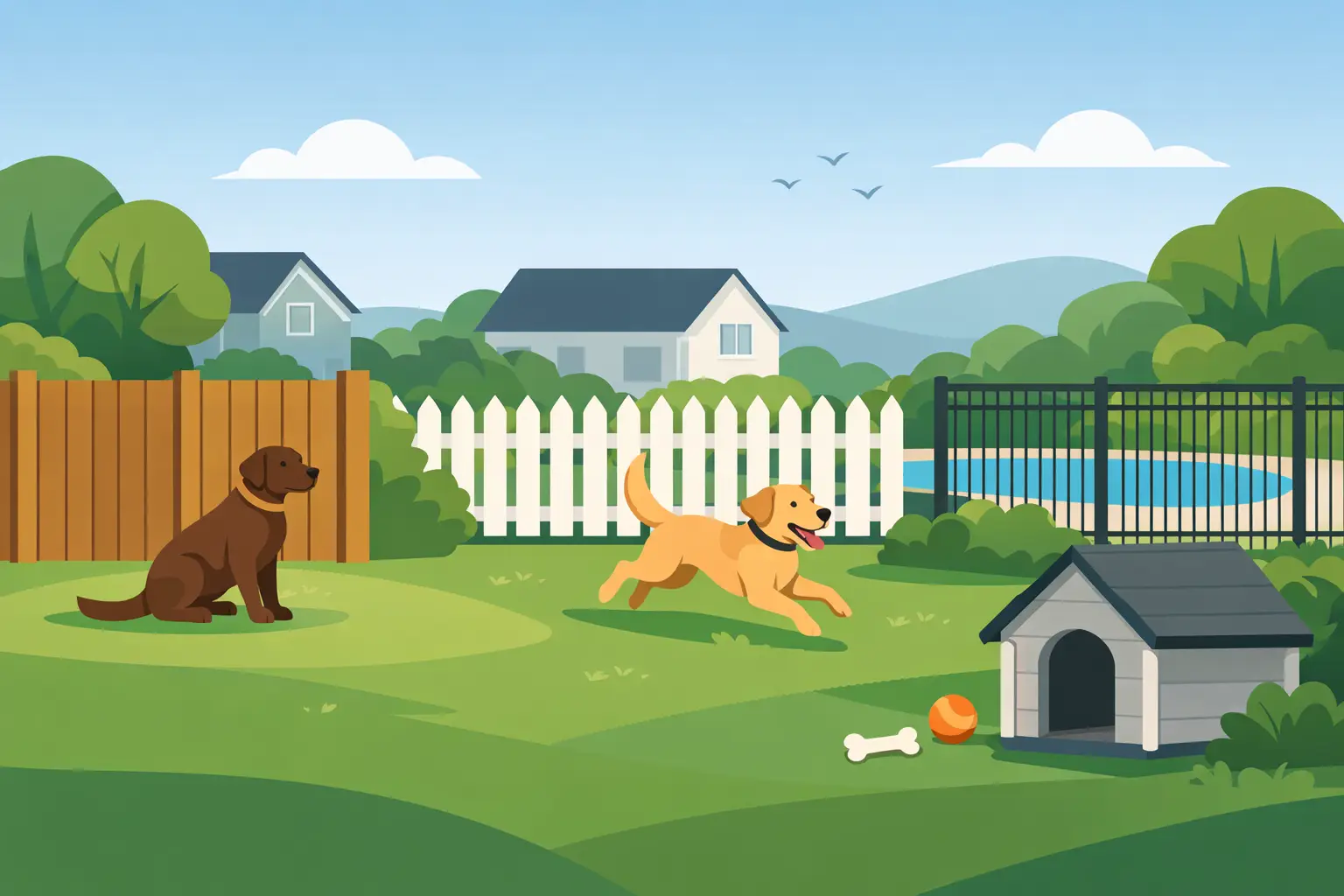
A dog can find the weak spot in a yard faster than most homeowners expect. A low gate latch, a gap beneath one panel, or a fence that looks tall from the patio but not from your dog's point of view can turn ordinary outdoor time into a stressful chase. The best fence for a dog's yard is not simply the tallest or most private option. It is the fence that matches your dog's size, behavior, energy level, and the conditions of your New Jersey property.
For some families, that means a clean vinyl privacy fence with a self-closing gate. For others, it means durable chain link for a large run, or aluminum fencing that preserves an open view while clearly defining the yard. The right answer depends on what your dog needs to stay safely home and what you need your property to look like for years to come.
What Makes a Fence Safe for Dogs?
A dog-safe fence needs to address three basic behaviors: jumping, digging, and pushing through openings. It also needs a gate that remains secure when kids, guests, or delivery drivers are coming and going. A beautiful fence is only useful if it performs when your dog gets excited by a squirrel, another dog walking by, or a loud noise beyond the property line.
Height is usually the first consideration. A 4-foot fence may be enough for a small, calm dog, but it is rarely the best choice for an athletic medium or large breed. Many homeowners choose 6-foot fencing for better containment and privacy. Dogs that are serious jumpers may need additional planning, such as avoiding horizontal rails that can act like footholds or locating the fence farther from raised decks, retaining walls, and sheds.
The bottom edge matters just as much. Dogs that dig can create an escape route below a properly installed fence. Installing posts securely, grading the yard carefully, and closing gaps at the bottom can make a major difference. In persistent digging areas, a contractor may recommend extending material below grade or using a buried barrier along the fence line.
Finally, think about visibility. Some dogs settle down when they cannot see every person and animal passing the yard. Others are perfectly content with an open fence. A reactive dog that barks or charges at activity outside the property may do better with a solid privacy-style fence.
Best Fence for Dog-Yard Safety and Privacy
Vinyl Fencing: Low Maintenance and Strong Privacy
Vinyl is one of the most popular choices for families who want a polished, private backyard without regular painting or staining. Solid vinyl panels create a visual barrier that can reduce distractions for dogs that react to neighboring pets, foot traffic, or cars. It is also smooth, easy to clean, and does not have the splinters, nails, or rough surfaces associated with aging wood.
For dog owners, vinyl works especially well at 6 feet high with closely fitted panels and a properly built gate. The trade-off is that vinyl is a more substantial upfront investment than basic chain link, and it can be damaged by a strong impact in extreme situations. Quality materials and professional installation help ensure the posts, panels, and gates stand up to changing New Jersey weather.
Wood and Cedar Fencing: Classic, Private, and Customizable
Wood fencing remains a practical choice for homeowners who want warmth, privacy, and design flexibility. A solid-board wood fence can block outside activity while giving the yard a traditional appearance that fits many New Jersey neighborhoods. Cedar is naturally more resistant to decay and insects than many other wood options, while pressure-treated pine can be a budget-conscious solution when maintained properly.
The key with wood is upkeep. A fence exposed to rain, snow, and summer sun needs inspection, sealing, or staining over time. Dogs that scratch, chew, or dig at the base can also speed up wear. Still, for a homeowner who values a natural look and wants a custom height or layout, wood is often a very good fit.
Aluminum Fencing: Secure Boundaries Without Losing the View
Aluminum fencing is an excellent option when the goal is to contain a dog while keeping the yard visually open. It is common around pools, landscaped properties, and homes with views where a solid privacy fence would feel too closed in. Aluminum resists rust, requires little maintenance, and can follow sloped terrain more effectively than many panel-style systems.
It is best for dogs that do not climb or attempt to squeeze through openings. Spacing between pickets must be narrow enough for the dog's head and body, especially for small breeds and puppies. Aluminum does not provide privacy, so it may not be ideal for a dog that becomes overstimulated by everything happening outside the yard.
Chain Link Fencing: Dependable Containment at a Practical Price
Chain link is a proven choice for dog runs, larger yards, and homeowners focused first on secure containment. It is durable, cost-effective, and available in different heights and gauges. Vinyl-coated chain link offers a softer appearance than traditional galvanized material and may blend more naturally with a residential setting.
Privacy slats can be added when homeowners want more screening, though they do not make chain link fully private in every light condition. For dogs that climb, chain link requires extra consideration because the mesh can provide pawholds. A taller fence, a secure top treatment, and careful gate hardware can help, but an avid climber may be better suited to solid vinyl or wood.
Composite Fencing: Long-Term Appearance with Less Upkeep
Composite and Trex-style fencing combine the look of wood with lower-maintenance materials. These systems are attractive for homeowners who want substantial privacy fencing without the recurring staining and sealing often required for natural wood. They can be a strong choice for a finished backyard where curb appeal matters as much as dog safety.
Cost is usually the main consideration. Composite fencing is typically a premium option, but it offers long-term value for homeowners planning to stay in the property and wanting a consistent appearance through New Jersey's wet springs, hot summers, and freeze-thaw winters.
Do Not Overlook the Gate
The gate is often the most used and most vulnerable part of a dog fence. It should be wide enough for lawn equipment and daily access, but it must also close reliably every time. A sagging gate, loose hinges, or latch that a clever dog can bump open defeats the purpose of a secure fence.
For active households, a self-closing hinge and child-resistant latch can provide useful peace of mind. If your dog waits near the gate when family members arrive home, consider a gate location that does not open directly toward a busy street or driveway. Double-gate entries can be helpful for dog runs or properties where an extra layer of security is needed.
Match the Fence to Your Dog, Not Just the Breed
Breed can offer clues, but behavior should drive the decision. A relaxed Labrador may be secure behind a 4-foot aluminum fence, while a determined small terrier may dig under a 6-foot privacy fence if the bottom edge is not addressed. A husky, shepherd, or athletic mixed breed may need more height and fewer climbable features. Senior dogs and small companion breeds may need a fence with tighter picket spacing rather than extra height.
Before selecting a material, watch how your dog uses the yard. Does your dog pace along the property line? Bark at neighbors? Dig at one corner? Lean against the gate? Those details are more valuable than choosing a fence based on appearance alone.
Property conditions also matter. Sloped yards, mature trees, drainage areas, local zoning rules, homeowner association standards, pool requirements, and shared property lines can all affect the best layout. A professional site evaluation can identify issues before materials are ordered and posts are set.
A Safe Yard Should Still Feel Like Home
The right fence gives your dog room to run, rest, and explore without putting the household on alert every time the back door opens. It also gives you a yard that suits your home, budget, and maintenance expectations. Northeast Fencing, LLC helps New Jersey homeowners weigh those details and build fencing that feels secure from the first walk-around to years of daily use.
Start with the dog you have, the yard you live with, and the level of privacy you truly want. A well-planned fence should make outdoor time easier for everyone—including the person holding the leash.