
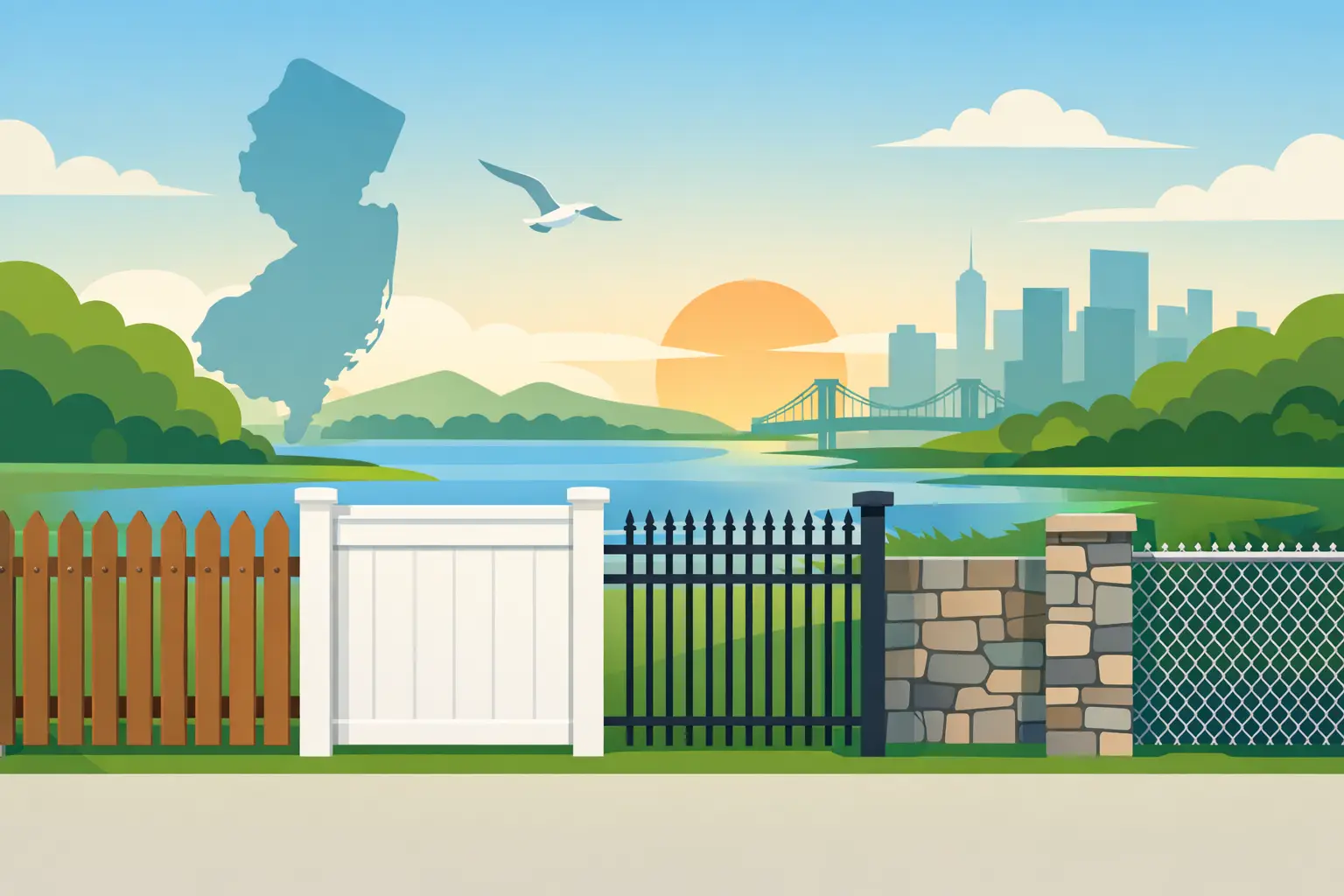
A fence that looks great on installation day is easy to choose. The better question is how it will look after years of New Jersey rain, humid summers, winter freeze-thaw cycles, and everyday use from kids, pets, gates, and lawn equipment. If you are asking what type of fence lasts longest, ornamental iron is often the longest-lived material when it is properly maintained. For many homeowners, though, aluminum, vinyl, and composite offer a more practical balance of service life, upkeep, appearance, and cost.
The best choice depends on what you need the fence to do. A secure pool enclosure has different requirements than a six-foot privacy fence. A commercial perimeter needs a different level of durability than a decorative front-yard boundary. Here is how the most common fencing materials hold up over time in New Jersey.
What Type of Fence Lasts Longest?
Properly fabricated and maintained ornamental iron can last 50 years or more, and historic iron fencing can remain in service for generations. Its strength is hard to match, particularly for security fencing, estate-style properties, and commercial applications.
That impressive lifespan comes with a condition: iron must be protected from corrosion. Scratches in the finish, chipped paint, and exposed welds should be addressed promptly. In areas exposed to road salt, coastal air, standing water, or heavy shade, inspections and touch-up work matter even more. Iron is not a set-it-and-forget-it fence, but it can be the longest-lasting fence when ownership includes routine care.
For homeowners who want a similar open, elegant look without the same rust concerns, aluminum is usually the practical longevity leader. Quality aluminum fencing commonly lasts 30 to 50 years or longer. It will not rust, does not need painting, and stands up well to rain, snow, and seasonal temperature changes. It is especially popular around pools, sloped yards, front property lines, and landscaped spaces where visibility matters.
The Best Long-Lasting Fence Materials Compared
Aluminum: The Low-Maintenance Durability Choice
Aluminum fencing is one of the strongest all-around investments for New Jersey properties. Its powder-coated finish resists fading and corrosion, while the material itself does not rot, splinter, or attract insects. Unlike iron, aluminum does not require regular repainting to stay protected.
The trade-off is privacy. Standard aluminum pickets create a clean boundary, but they do not block views, wind, or sound. Aluminum is also lighter than iron, so it is not always the first choice for high-security commercial sites. Still, for a pool fence, pet enclosure, decorative perimeter, or yard with changing elevations, it delivers an excellent lifespan with very little homeowner effort.
Ornamental Iron: Built for Generations with Care
Ornamental iron is the premium answer when strength, character, and security are the main goals. A properly installed iron fence feels substantial, and custom gates can make a major visual statement at a driveway entrance or commercial property.
Its weakness is moisture. Even a high-quality coating can eventually be damaged by impact or wear. Catching rust early is straightforward, but ignoring it allows corrosion to spread. Property owners willing to inspect the fence annually, clean it as needed, and touch up damaged areas can expect iron to outlast most other materials.
Composite: Durable Privacy Without Wood's Upkeep
Composite fencing combines recycled wood fibers and polymers to create privacy panels with a more substantial appearance than vinyl. Depending on the product and installation, composite fencing can last roughly 25 to 40 years. It resists rot, insect damage, and many of the warping issues associated with natural wood.
For homeowners who love the warmth of a wood-style privacy fence but do not want to stain it every few years, composite is a strong contender. It typically costs more upfront than pressure-treated pine or standard vinyl, and some products can expand and contract with temperature shifts. Using the correct posts, fasteners, spacing, and manufacturer-approved installation methods is essential to avoid sagging or movement over time.
Vinyl: Dependable, Clean, and Low Effort
Vinyl fencing is a popular choice for privacy, pet safety, and family backyards because it offers a crisp appearance with minimal maintenance. A well-installed vinyl fence often lasts 20 to 30 years, and premium systems can go beyond that. It will not rot, rust, or require staining.
New Jersey winters are the main reason installation quality matters. Vinyl can become more brittle in extreme cold, and a direct impact from a snowblower, falling branch, or vehicle can crack a panel. Strong posts set at the correct depth and a fence layout built for wind load make a major difference. Vinyl is an excellent long-term option, but it is not indestructible.
Chain Link: Durable Utility at a Practical Price
Galvanized chain-link fencing can last 15 to 30 years, while vinyl-coated chain link can often extend that service life by adding another layer of protection. It is a proven option for dog runs, sports areas, commercial boundaries, utility spaces, and large yards where budget matters.
Chain link is not generally selected for privacy unless privacy slats are added. Those slats can improve the look and screening, but they may need replacement before the metal framework does. The longevity of chain link comes down to coating quality, terminal posts, gate hardware, and whether the fabric remains tight rather than sagging over time.
Wood: Beautiful, but Maintenance Decides Its Lifespan
Wood fencing can be a smart choice when natural character, full privacy, and an affordable initial price are priorities. Cedar generally outlasts pressure-treated pine because it has natural resistance to decay and insects. A cedar fence may last 15 to 25 years with good care, while pressure-treated pine often lasts 10 to 20 years depending on moisture exposure, soil conditions, and maintenance.
Wood needs more attention than metal or synthetic materials. Staining or sealing helps limit water absorption, cracking, and sun damage. Boards and posts near soil level are especially vulnerable, since constant moisture is where rot often begins. A wood fence can serve a property well for many years, but it is not the material to choose solely for the longest possible lifespan.
The Fence Posts and Gates Matter as Much as the Panels
Material is only half the answer. A fence system will not last if its posts shift, its gates sag, or its hardware fails early. In New Jersey, proper post depth is especially important because frost movement can push shallow posts out of alignment over time.
Posts should be selected to suit the fence height, material weight, wind exposure, and soil conditions. Privacy fencing catches more wind than an open-picket aluminum fence, so it requires a stronger support system. Gates need reinforced posts and correctly sized hinges because they carry repeated moving loads that standard fence sections do not.
Drainage also affects longevity. Water that collects around posts can accelerate wood decay, contribute to frost heave, and create avoidable stress on the entire fence line. An experienced installer considers grade, drainage paths, buried utilities, property lines, and gate placement before the first post goes into the ground.
Choose for Your Property, Not Just the Lifespan Chart
The fence that lasts the longest on paper is not automatically the best fence for your home. If privacy is non-negotiable, aluminum and ornamental iron will not meet the goal without landscaping or another screening solution. If you need a code-compliant pool enclosure, an open-style aluminum fence may be a better fit than a solid privacy fence. If the priority is an affordable, secure enclosure for a large commercial lot, chain link may provide the best value per foot.
For a low-maintenance residential fence, aluminum is often the safest long-term choice where privacy is not needed. For privacy with less upkeep than wood, vinyl or composite deserves serious consideration. For a classic, natural backyard setting, cedar remains a strong option when the owner is prepared to maintain it. And when security and a lasting architectural look are worth the extra attention, ornamental iron stands apart.
A fence should fit the way your property is used today and still perform years from now. Northeast Fencing, LLC can help New Jersey homeowners and commercial property owners weigh material life, privacy, safety, maintenance, and budget before choosing a fence that will continue to earn its place in the yard.