
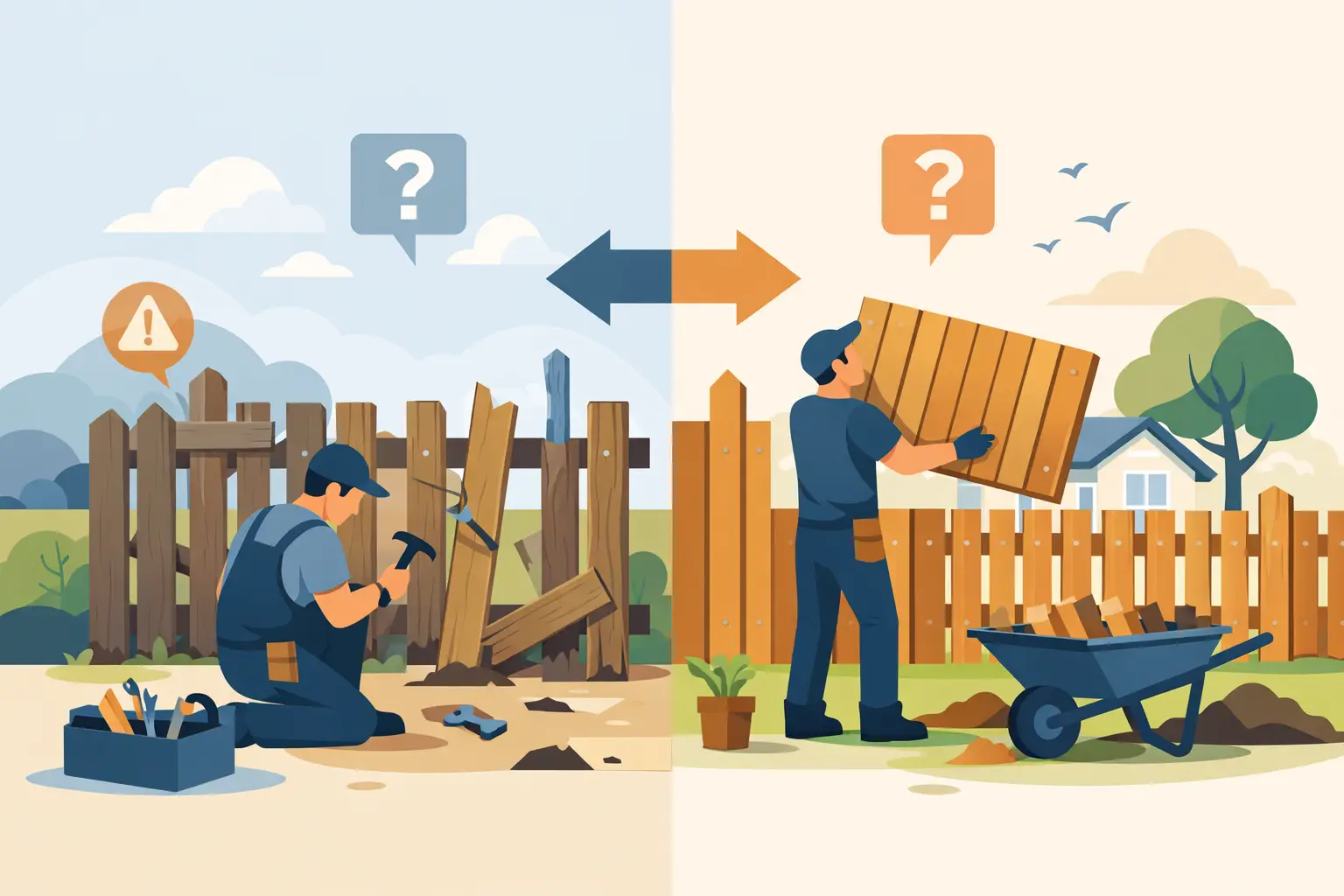
A leaning fence panel after a heavy New Jersey storm can look like a small problem until a child, dog, or neighbor’s property is on the other side of it. The question of fence repair or replace is not just about appearances. It is about safety, privacy, security, and whether spending money on a patch now will only lead to a larger bill later.
The right answer depends on the type of fence, the source of the damage, the condition of the posts, and how much useful life remains. A professional assessment can separate a repairable issue from a fence that has reached the end of the line.
When Fence Repair Is the Smart Choice
Repair is often the practical choice when damage is limited and the rest of the fence is stable. A single broken picket, bent chain link section, loose gate hinge, or cracked vinyl panel does not automatically call for a full replacement. If the posts are solid, the fence line remains straight, and the surrounding sections are in good condition, a targeted repair can restore performance at a sensible cost.
Wood fences are especially repair-friendly when decay is isolated. Replacing a few rotted boards or rails can preserve the structure if the posts have not softened below ground level. Cedar and pressure-treated pine can both last for years with timely maintenance, but ignored moisture damage tends to spread. Addressing one bad area early may prevent several sections from failing later.
Vinyl fencing can also be repaired successfully after impact damage. A mower, fallen branch, or wayward ball may crack one panel while leaving the posts and rail system intact. In that situation, replacing the damaged component is usually more efficient than rebuilding the entire run. Matching the existing style and color matters, especially if the fence is older and has weathered over time.
Chain-link and aluminum fences frequently benefit from repairs because their structural components are designed in separate sections. A damaged mesh panel, loose tension wire, bent rail, or sagging gate can often be corrected without disturbing the full perimeter. For commercial properties, this can be particularly valuable when security needs to be restored quickly with minimal disruption.
Signs a Repair Will Hold Up
A repair is more likely to be worthwhile when the damage has a clear, local cause, such as a storm, vehicle impact, or failed hardware. The posts should be plumb and firmly set, and adjacent sections should not show widespread rot, rust, cracking, or movement.
It also helps when replacement materials are readily available. A repair that blends with the existing fence protects curb appeal. If a discontinued panel style or faded color makes the repaired area stand out, homeowners may decide that replacement offers a better long-term result.
Fence Repair or Replace: Look Below the Surface
The posts usually decide the job. Fence boards and panels are visible, but posts carry the load. When posts shift, rot, rust through, or heave out of the ground, the fence can no longer stay straight for long. Installing new pickets on failing posts may make the fence look better for a few months, but it does not solve the structural problem.
Walk the fence line and look for repeated leaning, gaps beneath panels, cracked concrete around posts, or sections that move when gently pushed. On a wood fence, probe the base of the posts for soft or crumbling material. On metal fencing, inspect for corrosion near ground level and at connections. On vinyl, watch for loose posts, cracked post sleeves, or rails that repeatedly pop out.
New Jersey’s freeze-thaw cycles add another concern. Water can collect around improperly set posts, freeze, expand, and gradually push them out of alignment. Soil movement, drainage issues, and years of seasonal weather can turn a once-straight fence into a wavy boundary. If several posts have moved, replacing isolated parts often becomes a cycle of repairs rather than a lasting solution.
Signs It Is Time to Replace the Fence
Replacement becomes the better investment when problems are widespread, structural, or safety-related. A fence that has been patched repeatedly may cost more to maintain than a new installation designed to serve the property for years.
Consider replacement when you see several of these conditions:
- Multiple posts are leaning, rotted, loose, or rusted.
- Damage affects long runs rather than one panel or gate.
- Wood boards, rails, and posts show widespread rot, splitting, or insect damage.
- Vinyl panels are brittle, cracked in several places, or no longer match available replacement parts.
- Gates drag, sag, or will not latch because the supporting structure has shifted.
- The fence no longer provides dependable privacy, pet containment, pool protection, or perimeter security.
Safety should move the decision faster. A damaged pool barrier, a gate that will not self-close, or a broken fence that lets pets reach a road should not wait for a cosmetic fix. Likewise, commercial property owners should take gaps in a security fence seriously. The fence has a job to do, and a temporary patch is not always enough.
Replacement may also make sense when your needs have changed. A low chain-link fence may have worked before a dog joined the household, but a taller privacy fence with a secure gate may now be the better fit. Homeowners who want more seclusion, a cleaner backyard view, or a material with lower maintenance may find that replacing an aging fence delivers more value than preserving an outdated one.
Compare Cost Over the Next Few Years
The least expensive option today is not always the most affordable option over time. A small repair can be the right call, but repeated repairs add up. If you have repaired the same fence section more than once, or if new failures keep appearing along the line, it is worth comparing the projected repair costs against a new fence.
Think about the fence’s age and material. A relatively new aluminum or vinyl fence with one damaged area is often worth repairing. An older wood fence with rot in the boards, rails, and posts is a different situation. Even if each repair seems manageable, labor and material costs can keep returning while the overall structure continues to decline.
A full replacement also gives you the opportunity to correct the issues that caused the old fence to fail. That may include setting posts at the proper depth, improving gate support, adjusting the layout for drainage, choosing a more durable material, or changing the fence height and style to better suit the property.
Material Matters When Choosing Repair or Replacement
Every fence material ages differently. Wood offers natural warmth and can be repaired board by board, but it needs protection from moisture and may eventually rot. Vinyl is low-maintenance and clean-looking, though severe impacts or aging can cause cracks that require panel replacement. Aluminum resists rust and works well for open views, pools, and decorative boundaries, while chain link remains a durable, practical choice for many yards and commercial sites.
Composite and Trex-style fencing can be a strong option for owners who want privacy with less upkeep than wood. Ornamental iron provides a classic, secure look but requires attention to rust before it spreads. The best replacement material is not automatically the most expensive one. It is the one that fits the property’s purpose, maintenance expectations, budget, and desired appearance.
Do Not Forget Gates, Codes, and Property Lines
A fence repair can reveal issues beyond the damaged section. Gates need proper clearance, sturdy hinges, reliable latches, and posts that can support their weight. If a gate has been dragging for years, the problem may be the post installation rather than the gate itself.
Before a replacement, confirm property boundaries and consider local requirements, particularly for pool fencing, height limits, and visibility near driveways or corners. A well-planned project avoids placing a new fence where it may create a dispute or require costly changes later. For shared boundaries, a clear conversation with neighbors before work begins can prevent confusion and keep the project moving smoothly.
Get a Clear Assessment Before You Commit
A trustworthy fence contractor should explain what is damaged, why it failed, and whether repair will realistically last. You deserve more than a quick quote that skips the condition of the posts, gate hardware, and surrounding sections. Ask whether the repair is intended as a long-term solution or a short-term measure, and ask what future issues are likely if you postpone replacement.
For homeowners and businesses across New Jersey, Northeast Fencing, LLC evaluates the full fence system, not just the most visible broken piece. That approach helps property owners make a confident decision based on safety, appearance, and long-term value.
A fence should make your property feel more secure, not give you another weekend problem to worry about. If the structure is sound, repair it well. If the damage is spreading or the fence no longer protects what matters, replacement can be the practical fresh start your property needs.