
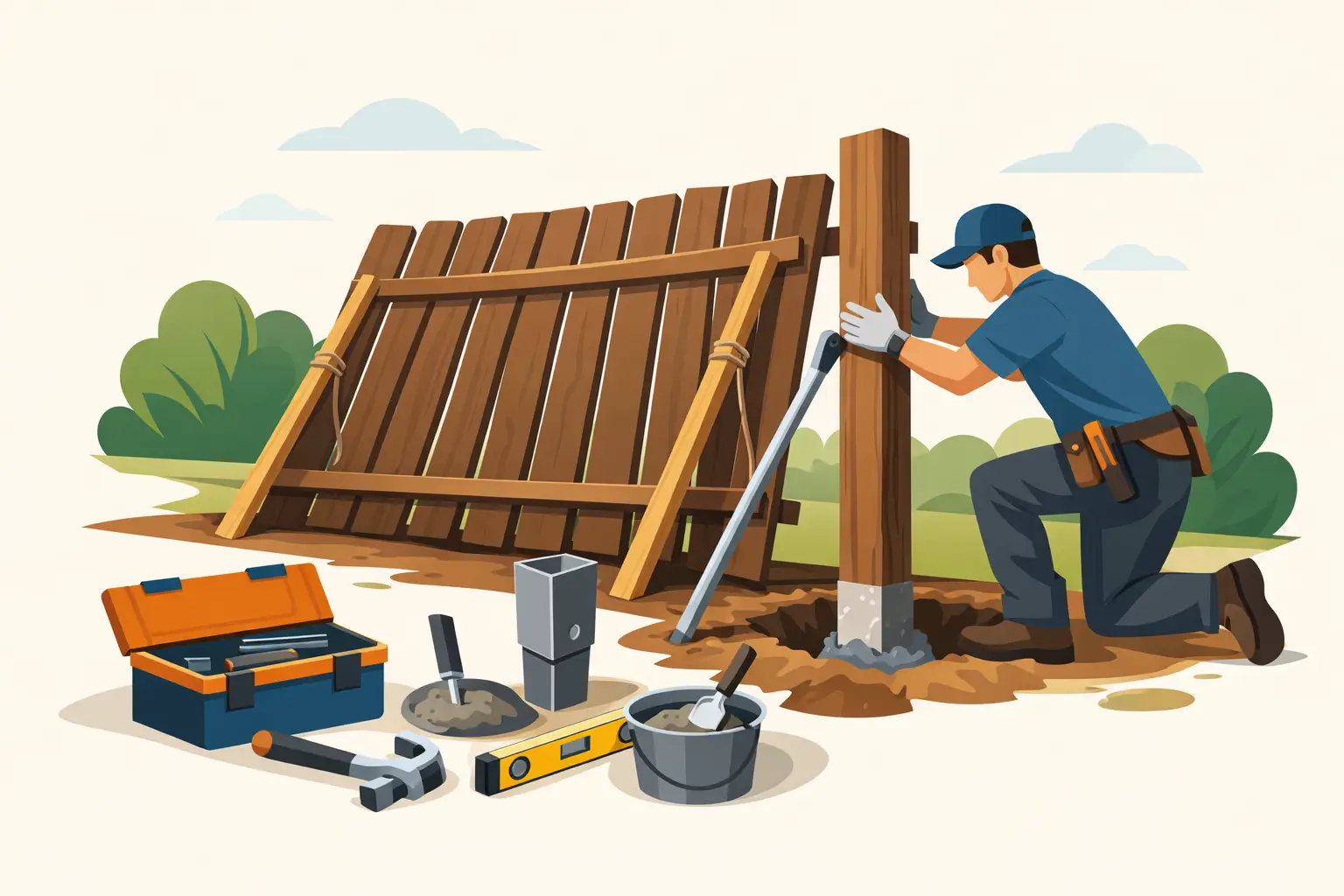
A fence rarely starts leaning all at once. You may first notice a gate that drags across the grass, a privacy panel that looks slightly lower than the rest, or a post that shifts when the wind picks up. Knowing how to repair leaning fence problems early can save a good section of fencing before it becomes a safety issue for children, pets, neighbors, or your property line.
In New Jersey, wet spring soil, freeze-thaw cycles, summer storms, and aging wood all put pressure on fence posts. The right repair depends on why the fence moved in the first place. A quick brace can stabilize a minor issue, but it will not solve a rotted post or a footing that has failed below grade.
Find the Real Reason the Fence Is Leaning
Before digging, pulling, or attaching new hardware, inspect the entire affected run. A leaning fence is usually a post problem, not a panel problem. Panels follow the post, so replacing boards or rails without addressing the support beneath them only hides the issue for a short time.
Start by checking whether one post is leaning or whether several posts are moving in the same direction. A single loose post can be caused by a damaged footing, impact from lawn equipment, a fallen branch, or an undersized hole. If multiple posts are leaning, look for wider causes such as poor drainage, soft soil, an old installation with shallow posts, or wind pressure on a solid privacy fence.
For wood fencing, press a screwdriver into the post near ground level. Wood that feels soft, flakes apart, or has deep dark decay is usually beyond a reliable reset. Cedar holds up well, but even quality cedar can rot when soil and mulch remain packed against it. Pine posts are especially vulnerable if they were not properly treated or if water has sat around the base for years.
Vinyl, aluminum, chain link, and composite fencing do not rot, but their posts can still lean when the concrete footing cracks, the soil settles, or a vehicle or tree limb pushes against the fence. With vinyl fencing, also inspect the rails and panel connections. A leaning post can put enough strain on these parts to crack them.
How to Repair a Leaning Fence with a Sound Post
If the post is structurally sound and the fence has only shifted slightly, it may be possible to straighten and reinforce it. This works best when the post has not rotted and the footing is still mostly intact.
Remove soil from the side of the post opposite the direction of the lean. For example, if the top of the post leans toward your yard, excavate the soil on the outside of that lean so the post can move back into position. Work carefully around rails, utilities, irrigation lines, and nearby landscaping.
Use a level on two adjacent sides of the post as you move it back to plumb. A come-along, ratchet strap, or temporary wood brace can help apply steady pressure without damaging the fence. Do not rely on simply pushing the fence by hand. That can loosen connected posts and turn a local repair into a larger problem.
Once the post is straight, assess the existing concrete. If it is solid and only small gaps developed around it, adding compacted gravel and fresh concrete around the footing may stabilize the repair. Gravel at the bottom and sides helps water drain away instead of collecting against the post. Use exterior-rated fasteners to secure temporary bracing while the repair sets.
Keep in mind that adding concrete is not always the answer. Concrete placed around a post with active rot will lock a failing post in place temporarily, then make replacement more difficult later. It also will not correct a footing that is too shallow for the fence height and local soil conditions.
Resetting a Loose Post
A loose but healthy post often needs a full reset. This is more work, but it is the right solution when the existing hole has widened, the footing has broken apart, or the post continues to shift after being straightened.
Detach the rails or panels connected to that post if needed. This prevents twisting or breaking the adjacent fence section while the post is removed. Dig around the footing until it can be lifted out, then inspect the hole. Remove loose soil, old broken concrete, and standing water.
The new hole should be deep enough to provide real support. As a general rule, fence posts need about one-third of their total length below ground, although the proper depth depends on fence height, soil, wind exposure, and the type of fence. A tall solid wood privacy fence catches far more wind than an open chain-link fence, so it needs stronger support.
Set the post on a gravel base, check it with a level, and brace it in position. Pour concrete around the post while maintaining the correct alignment. Shape the top of the concrete so it slopes away from the post, helping rainwater shed instead of pooling at the wood. Let the footing cure before reattaching heavy panels, gates, or tension wire.
When the Post Is Rotted or Broken
A post that is rotted at ground level should be replaced, not patched. Metal post menders and sister boards can sometimes provide a short-term stabilization for a small residential section, but they are not a long-term repair for a fence that protects a pool area, contains a dog, or supports a gate.
Replacing one wood post requires careful support of the adjacent panels. The fence section may need temporary bracing while the old post is cut out or removed. New posts should match the fence design, but they should also be chosen for longevity. Pressure-treated structural posts are common for wood fences, while steel post systems can add strength behind certain vinyl or composite fence styles.
If several posts show rot, replacement may be more cost-effective than repairing one section at a time. This is especially true when rails are warped, pickets are splitting, or the fence has reached the end of its expected service life. A series of small repairs can add up quickly without giving your yard the security or curb appeal you want.
Do Not Ignore Gates and Corner Posts
A leaning gate post needs prompt attention. Gates place concentrated weight and repeated movement on their hinge-side post. If that post shifts, the gate can sag, scrape the ground, stop latching, or pull loose from the hardware.
Corner posts and end posts deserve the same attention because they carry tension from the fence run. This is particularly important for chain-link fencing, where tension wire and fabric can pull a weakened terminal post out of alignment. Repairing a middle post while ignoring a leaning corner post may leave the entire line unstable.
For a gate, inspect hinges, latch alignment, and the condition of the frame after the post is reset. You may need to adjust the hinges once the post is plumb again. Do not force a sagging gate closed, especially around a pool or pet enclosure, where dependable latching matters.
Fix the Conditions That Caused the Lean
The repair should address water as well as structure. Downspouts that discharge beside the fence, low spots in the yard, and dense soil can soften the ground around posts. Redirecting runoff, improving grading, or adding a drainage solution can prevent the same problem from returning after the next heavy rain.
Avoid piling mulch, soil, or leaves against wood posts. Keep vegetation trimmed back so the lower rails and post bases can dry after rain. For privacy fences exposed to strong winds, check that panels are properly fastened and that posts are sized for the height and weight of the fence.
Property line concerns also matter. A fence that leans toward a neighbor’s yard can create tension even when the original installation was correctly placed. Before moving posts or replacing a long run, confirm where the fence belongs and whether permits or local requirements apply to the planned work.
When to Call a Fence Professional
A homeowner can often handle a minor post adjustment, particularly on a short wood or chain link section. Professional repair is the safer choice when a fence is tall, badly displaced, connected to a gate, near a pool, installed on a slope, or showing rot across multiple posts. It is also wise to bring in an experienced contractor when concrete removal, underground utilities, or property-line questions are involved.
Northeast Fencing, LLC helps New Jersey homeowners evaluate whether a leaning fence can be repaired, reinforced, or should be replaced before the damage spreads. A clear assessment protects your investment and avoids spending money on a temporary fix that will fail through another season of rain, wind, and changing ground.
A straight fence does more than improve the view from your yard. It keeps gates working, boundaries clear, and the outdoor space around your home safer for the people and pets who use it every day.