
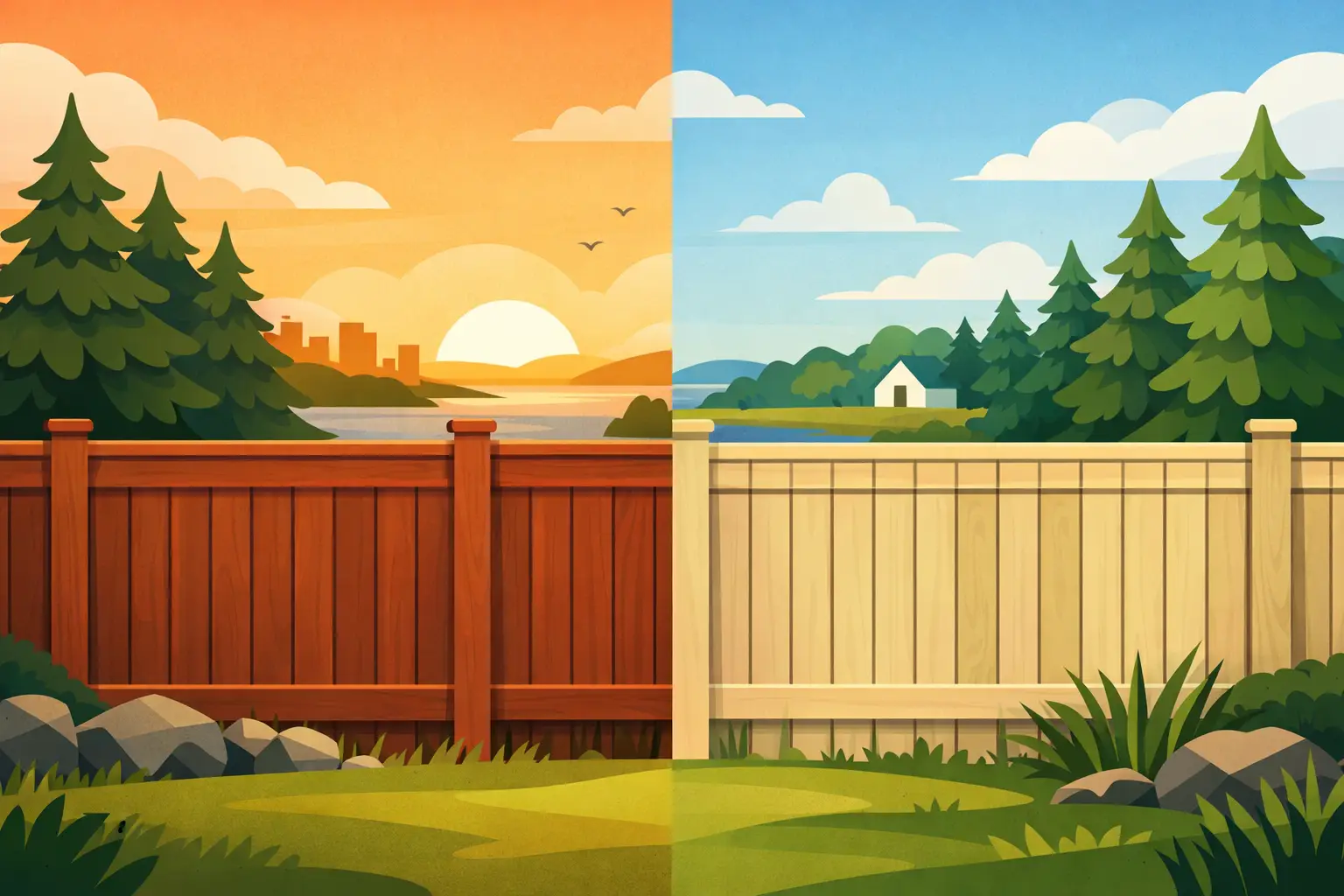
A wood privacy fence has to do more than look good on installation day. In New Jersey, it needs to handle humid summers, heavy rain, snow, freeze-thaw cycles, and the occasional muddy dog race along the property line. When homeowners compare cedar fence vs pine, the right answer usually comes down to where the fence will sit, how long they expect it to last, and how much maintenance they are willing to take on.
Cedar and pine can both make attractive, dependable fences when the material is selected and installed correctly. They are not interchangeable, though. Cedar costs more upfront and brings natural resistance to insects and decay. Pressure-treated pine is typically the more affordable choice, but it relies on treatment and regular care to stay strong over time.
Cedar Fence vs Pine: The Main Difference
The biggest difference is how each wood protects itself from the elements. Cedar contains natural oils and tannins that help it resist moisture, fungal decay, and insect activity. That gives cedar a meaningful advantage in the damp conditions common across Middlesex County, Union County, and surrounding New Jersey communities.
Pine is a softer wood without those same natural defenses. For fencing, pine is generally pressure-treated, meaning preservatives are forced into the wood to help protect it from rot and insects. Quality pressure-treated pine can perform well, especially when it is properly sealed and kept out of standing water. Still, if the protective treatment wears down or the boards develop deep cracks, pine can become more vulnerable than cedar.
Cedar also tends to be more stable. Wood naturally expands and contracts as weather changes, but cedar generally experiences less warping, twisting, and shrinking than pine. That can matter on a long privacy fence where uneven boards quickly affect the appearance of the entire yard.
Cost: Upfront Price Versus Long-Term Value
Pressure-treated pine is usually the budget-friendly option. If your priority is enclosing a large backyard, creating a safe play area, or defining a property line without stretching the project budget, pine can make good financial sense. It is widely available and offers a traditional wood-fence look at a lower initial cost.
Cedar costs more because it is naturally durable, visually distinctive, and often selected for higher-end residential projects. The price difference may be easier to justify when you plan to stay in the home for many years, want a fence that requires less ongoing intervention, or place a high value on curb appeal.
A lower initial price does not automatically mean a lower overall cost. A pine fence may need more frequent sealing, board replacement, or repairs as it ages. Cedar may require fewer repairs under the same conditions, although it still needs attention to reach its expected service life. The best value is the material that fits both your budget now and your expectations for the next decade or more.
Appearance and Curb Appeal
Fresh cedar has a warm, rich color range, from light honey tones to reddish brown. Its grain is often more pronounced, which gives cedar fencing a natural, finished appearance even before staining. Many homeowners choose it for visible front-yard boundaries, custom gates, and backyard privacy fences that are meant to complement landscaping, patios, and outdoor living areas.
Pine typically has a lighter, more uniform appearance with knots that can be more noticeable. It can still look clean and attractive, particularly when painted or stained. For homeowners who want a specific solid color, pine may be a practical canvas. Just remember that paint and opaque stain create another maintenance item: surfaces will eventually need cleaning and recoating.
Both woods weather to a silvery gray if left unfinished. Some homeowners like that aged look, while others prefer to preserve the original color with a UV-protective stain. The important point is to make that choice intentionally. Waiting until the fence looks dry, faded, or cracked usually creates more prep work later.
How Cedar and Pine Handle New Jersey Weather
New Jersey weather puts fence materials to work. Summer moisture can encourage mold and mildew. Winter freezing can widen small cracks. Leaf buildup along the fence bottom can trap water, while sprinklers and poor drainage can keep posts wet for far too long.
Cedar has an edge because of its natural decay resistance. It is especially well suited to fence panels and pickets that face regular rain, shade, or humid conditions. However, cedar is not immune to water damage. Posts set in poorly drained soil, boards resting against wet mulch, and neglected fasteners can shorten the life of any cedar fence.
Pressure-treated pine is built to handle exterior exposure, but proper installation is essential. Posts should be selected for ground contact where needed, installed at an appropriate depth, and supported by sound drainage practices. Rails and pickets should have spacing that allows water to run off and air to circulate. A fence that stays wet is a fence that ages faster, regardless of species.
For coastal-influenced or persistently damp areas, hardware matters as much as the boards. Hot-dipped galvanized or stainless-steel fasteners help prevent staining and premature corrosion. Professional installation also helps keep panels level and posts secure as the ground shifts through seasonal changes.
Maintenance Requirements
Neither cedar nor pine is a set-it-and-forget-it fence. The maintenance difference is one of degree.
Cedar benefits from periodic cleaning and a quality penetrating stain or sealer. A semi-transparent product can preserve the wood's natural character while adding water and UV protection. Depending on sun exposure and product quality, homeowners may need to recoat cedar every few years. Check for loose boards, damaged pickets, and vegetation pressing against the fence each spring.
Pine needs the same basic inspection, but regular sealing is more important. Because pine depends on its pressure treatment and surface protection, keeping moisture out of cracks and end grain helps prevent early deterioration. If pine is painted, watch for peeling areas that allow water behind the finish.
Avoid pressure washing either wood aggressively. Too much pressure can roughen the surface, raise the grain, and force water into the boards. A gentle wash, appropriate wood cleaner, and time to dry thoroughly before staining are safer choices.
When Pine Is the Better Choice
Pine is not a lesser choice simply because cedar is naturally more durable. It can be the right material for a practical, well-built fence.
Choose pressure-treated pine when budget is the main driver, when you need to fence a large area, or when you intend to paint the fence a solid color. It is also a sensible fit for rental properties, utility boundaries, and projects where good installation and reasonable maintenance matter more than premium wood grain. A properly constructed pine fence can provide years of privacy, security, and pet containment.
The key is not to cut corners on post quality, drainage, or protective finishing. The structure beneath the pickets determines how well the fence performs.
When Cedar Is Worth the Investment
Cedar is often worth the added cost for homeowners who want long-term visual appeal with less risk of warping and decay. It is a strong choice for backyard privacy fencing, decorative perimeter fencing, and custom gates where the material is highly visible and used often.
It also makes sense where moisture is a concern or where a homeowner prefers a natural wood finish instead of paint. Cedar's stability can help a fence keep its cleaner lines over time, which is valuable on properties where the fence is a major part of the landscape.
For families and pet owners, either material can create a secure yard when the fence height, gate hardware, post installation, and layout are designed correctly. The best board species cannot compensate for a gate that does not latch or posts that are not set securely.
Choose the Wood That Fits Your Yard
The cedar fence vs pine decision is not only about which board is stronger. Look at drainage, shade, exposure to sprinklers, desired finish, project budget, and how long you expect the fence to serve your property. A sunny, dry yard with a homeowner committed to maintenance may be a great fit for pressure-treated pine. A shaded yard or a project where appearance and natural durability are priorities may point to cedar.
At Northeast Fencing, LLC, we help New Jersey property owners match the fence material to the job, rather than pushing a one-size-fits-all answer. A clear plan for material, post depth, gate placement, and maintenance will do more for your fence than choosing based on price alone. Start with how you use your yard, and build the fence that will keep working for it season after season.