
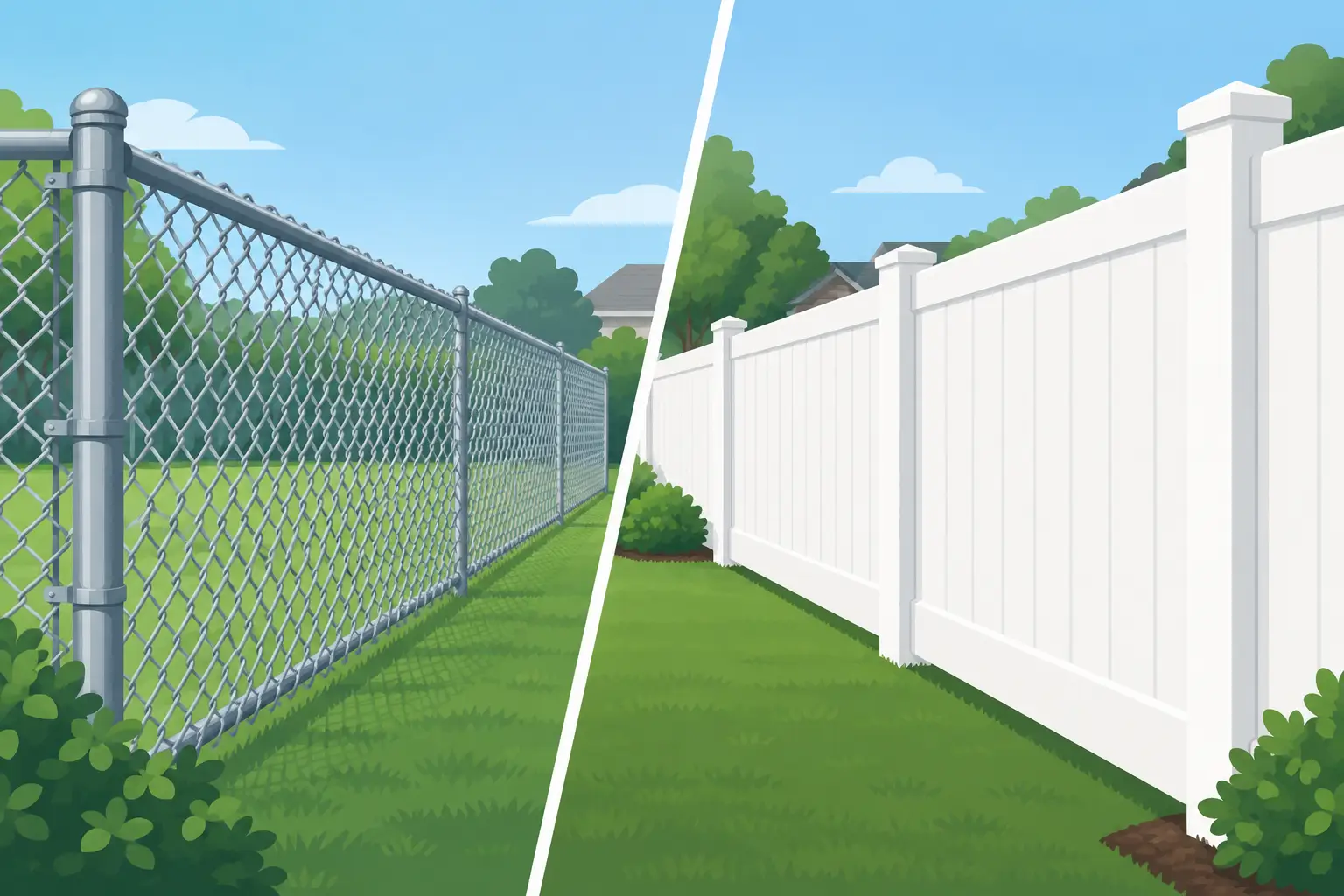
A fence that looks affordable on installation day can feel like the wrong choice a year later if it does not provide the privacy, security, or appearance your property needs. When homeowners compare chain link versus vinyl, the better option usually comes down to one question: What do you need the fence to do every day?
For a dog run, side yard, commercial perimeter, or large property line, chain link can be a practical, cost-conscious answer. For a backyard where families want privacy, a polished appearance, and minimal upkeep, vinyl often makes more sense. Both materials can be professionally installed to last, but they solve very different problems.
Chain Link Versus Vinyl at a Glance
Chain link fencing is built from woven, galvanized steel mesh attached to steel posts and rails. It is known for strength, visibility, and value. A standard chain link fence creates a clear boundary without closing off the yard, which is useful when you want to contain pets or define a property line while keeping an open feel.
Vinyl fencing uses solid panels or pickets made from durable PVC. It is available in privacy, semi-privacy, picket, ranch rail, and other styles. Most homeowners picture a tall white or tan vinyl privacy fence, but the material offers more design flexibility than that single look suggests.
The biggest difference is simple: chain link prioritizes function and visibility, while vinyl prioritizes privacy and curb appeal. Neither is automatically better. The right fence is the one that matches your lot, budget, local requirements, and how you use the space.
Upfront Cost and Long-Term Value
Chain link is generally the more affordable material, particularly for long fence runs. Its open mesh design uses less material than full privacy panels, and installation is often straightforward on level ground. For homeowners fencing a large backyard, a side lot, or a kennel area, the savings can be significant.
Vinyl typically costs more upfront because of the panels, posts, reinforcement, hardware, and installation requirements. A privacy fence also needs to stand up to wind pressure, so proper post depth, spacing, and reinforcement matter. Cutting corners on installation can lead to leaning sections, loose posts, or gate problems later.
The lower initial price of chain link does not always mean it is the better value. If privacy is a non-negotiable part of your project, installing chain link now and adding privacy slats later may not deliver the finished look you wanted. It may also narrow the cost difference with vinyl. On the other hand, paying for a vinyl privacy fence when you only need a safe enclosure for a dog may be more than the property requires.
Think beyond the price per foot. Gates, slopes, tree roots, old fence removal, corner posts, and access to the work area can all affect the installed cost of either option.
Privacy, Appearance, and Curb Appeal
Privacy is where vinyl has a clear advantage. A solid vinyl privacy fence blocks views from neighboring yards, patios, driveways, and nearby streets. It can make a compact backyard feel more comfortable for outdoor dining, playtime, or relaxing by the pool.
Vinyl also creates a clean, consistent appearance. It does not need painting or staining, and its color is designed to hold up over time. For many New Jersey homeowners, that clean finish complements siding, patios, landscaping, and newer outdoor living spaces.
Standard chain link provides little visual privacy. You can see through it, and so can your neighbors. That is not necessarily a drawback. An open fence can make a smaller yard feel less boxed in and allows sightlines across a property. It is also a sensible choice for areas where security depends on visibility, such as commercial lots or equipment storage areas.
Privacy slats can improve the appearance and screening of a chain link fence, but they do not create the same solid, finished look as vinyl panels. Slats may be a good middle ground for a budget-conscious property owner who needs some screening without moving to a full privacy system.
Security and Safety for Pets and Families
Both fence types can safely contain children and pets when the height, gate hardware, and installation are appropriate. The details matter more than the material alone.
Chain link is difficult to push through and performs well for active dogs. Because it is steel, it is a strong option for dog enclosures, athletic spaces, commercial perimeters, and utility areas. It is especially practical when visibility through the fence is helpful. A properly sized mesh and secure bottom edge can help prevent smaller pets from slipping out or digging underneath.
Vinyl provides a secure physical boundary while removing the visual distractions beyond the yard. That can be useful for dogs that bark at passing pedestrians, neighboring pets, or cars. Solid panels can also help create a calmer play area for children. However, vinyl is not intended to be climbed, and it should be installed with quality posts and rails that can handle normal backyard use.
Gates deserve just as much attention as fence panels. A self-closing, self-latching gate may be needed around a pool, while a wider custom gate may be more useful for equipment access or a driveway. For either chain link or vinyl, a gate that drags, sags, or fails to latch defeats the purpose of the fence.
Maintenance Through New Jersey Seasons
Vinyl is one of the lowest-maintenance fencing choices available. It does not rust, rot, splinter, or require repainting. Dirt, pollen, and occasional mildew can usually be cleaned with mild soap, water, and a soft brush. Homeowners who want a polished fence without annual staining often choose vinyl for that reason.
Vinyl does have limits. It can crack under a hard impact, especially in very cold conditions, and it can be damaged by a falling branch, lawn equipment, or an aggressive impact. Repairing a broken section is possible, but matching an older fence or replacing a specialty panel may require attention from an experienced installer.
Galvanized chain link is made to resist rust, and vinyl-coated chain link adds another layer of protection and a softer appearance. Still, steel fencing benefits from periodic checks. Look for damaged coating, loose ties, bent rails, settling posts, and worn gate hinges. Addressing a small issue early is far easier than waiting for a section to sag.
For wooded properties or yards with heavy leaf buildup, both materials need space around the fence line. Keeping vines, shrubs, and debris from pressing against the fence helps it stay cleaner and makes future repairs easier.
Which Fence Works Best for Your Property?
Chain link is often the stronger match when the priority is securing a large area at a practical price. It works well for dog runs, rear property lines, commercial sites, playgrounds, utility areas, and properties where an open view is preferred. Black vinyl-coated chain link can offer a more refined appearance than traditional galvanized steel while keeping the same functional benefits.
Vinyl is often the better fit when privacy and a finished residential look are at the top of the list. It is popular around backyards, patios, pool areas, townhome properties, and homes close to neighbors. A white vinyl picket fence can also define a front yard without blocking the view, while semi-privacy styles offer airflow with more screening than chain link.
Your property layout can change the decision. A steep slope, irregular boundary, or mature landscaping may influence which system installs more efficiently. Local zoning rules, HOA requirements, easements, and pool barrier standards can also affect fence height, placement, style, and gate requirements. A professional site visit helps identify those issues before materials are ordered.
Do Not Choose Material Before Confirming the Fence Plan
The fence material is only one part of a successful project. Before committing to chain link or vinyl, confirm the property line, identify underground utilities, consider drainage, and decide where gates will be most useful. A fence placed a few feet off the true boundary or a gate installed on the wrong side of the yard can create an expensive headache.
It also helps to picture the yard in every season. Think about where snow is piled, where trash bins need to pass, whether a future patio or shed is planned, and how pets move through the space. These practical details often point to the right height, gate width, and fence style faster than a catalog photo does.
For homeowners and businesses across New Jersey, Northeast Fencing, LLC can help turn those decisions into a fence plan built for the way the property is actually used. The best choice is not the trendiest material or the cheapest estimate. It is the fence that gives your family, pets, or business the right level of protection and peace of mind every time you step outside.