
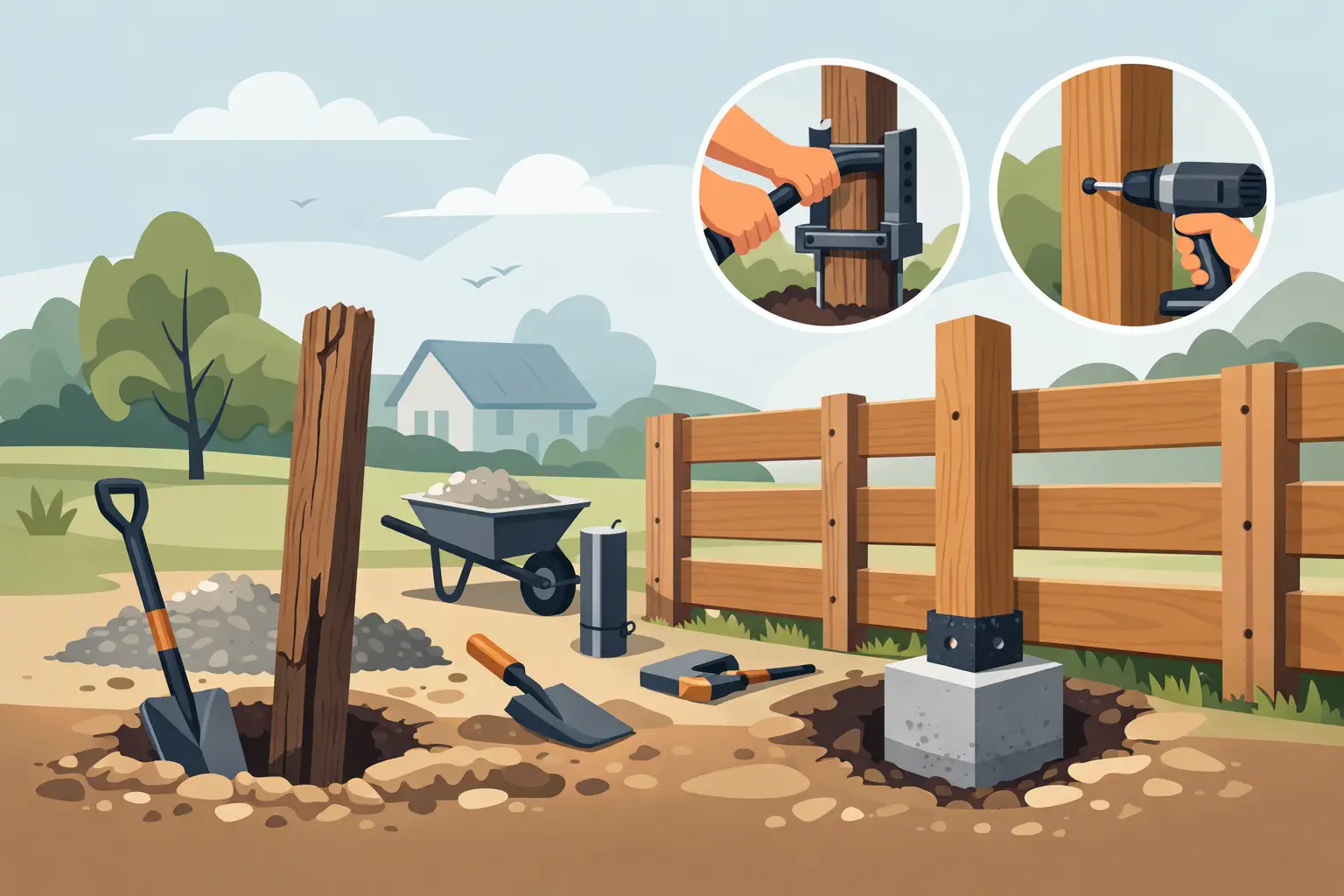
A leaning fence rarely starts with a bad panel. More often, one failed post is pulling on every rail, picket, and gate connected to it. Choosing the right fence post replacement methods can save a sound fence section, protect a backyard used by children or pets, and prevent a small repair from turning into a full replacement.
For New Jersey property owners, the answer is not always as simple as removing a post and pouring new concrete. Soil conditions, winter freeze-thaw cycles, fence height, wind exposure, and the material of the fence all affect what will hold up over time. A proper repair starts by finding out why the post failed in the first place.
Start by Finding the Cause of the Failure
A post that is visibly leaning may be loose in the ground, rotted below grade, cracked near the concrete line, or damaged by impact. Wood posts commonly fail where moisture stays trapped at ground level. Chain-link and aluminum posts may loosen when the concrete footing shifts or breaks apart. Posts beside a gate take more stress than line posts and can bend, pull forward, or settle prematurely.
Walk the fence line before deciding on a repair. Check whether the adjacent posts are plumb, whether rails have pulled loose, and whether the fence is still sitting at its original height. If several posts lean in the same direction, the issue may be poor drainage, shallow footings, or a section that was not built to handle the load. Replacing only the worst post without addressing those conditions can produce another repair call after the next hard winter.
It also pays to look for hidden damage. A wood post can appear solid above ground while being soft and deteriorated below the surface. A fence that sways when pushed may have more than one weak footing. For a privacy fence, this matters because solid panels catch wind like a sail, putting significant pressure on every post in the run.
Fence Post Replacement Methods for Different Problems
The best method depends on the post material, the condition of the footing, and whether the fence can be temporarily supported during the work. Some repairs are practical for a single line post. Others require removing a full section so the alignment remains straight and secure.
Full Post Removal and Reset
A full replacement is the most dependable choice when a wood post is rotted, snapped, severely leaning, or loose in a failed concrete footing. The damaged post is disconnected from the rails or panels, excavated, and removed with its old concrete when necessary. A new post is then set at the correct depth, leveled carefully, and secured in a fresh footing before the fence section is reattached.
This approach takes more labor, but it addresses the whole problem instead of covering it up. For most residential privacy fences in New Jersey, a new post needs enough depth and concrete support to resist frost movement and wind loads. The exact depth depends on fence height, soil, local conditions, and the type of fence, but shallow replacements are a common reason fences begin leaning again.
A full reset is especially smart for gate posts. Gates place a constant twisting load on hinges and latches. If a gate post has moved even slightly, simply straightening it may not restore reliable operation. Replacing it with a properly sized post and footing gives the gate a stable foundation for daily use.
Dig Around the Existing Footing and Install a New Post
Sometimes the old post has rotted away but the concrete footing remains firmly in place. In limited situations, a contractor can dig around the footing, break out enough concrete to remove the remaining post, and install a new post in a rebuilt opening. This can reduce excavation compared with removing a large, intact concrete mass.
The trade-off is that this method only works when the remaining footing is stable, large enough for the fence load, and positioned correctly. If the footing is cracked, undersized, or leaning, saving it is false economy. A new post set into compromised concrete will follow the same path as the old one.
Post Splicing or Sistering
A splice repair joins new wood to the remaining portion of an existing post. Sistering uses a new support post or structural member attached alongside a damaged post. These methods can be useful when the damage is above ground and the buried portion of the post is confirmed to be solid.
For example, a vehicle bump may break a rail connection or split the upper section of a wood post without damaging the part below grade. In that case, a carefully built repair may restore the section without disturbing a sound footing. It is not the right solution for rot at ground level, loose concrete, or a post that has lost its structural strength underground.
These are often temporary or situation-specific repairs rather than the preferred long-term fix for an older privacy fence. The repaired post still needs to look appropriate next to surrounding panels, especially along a front yard or visible property line.
Steel Post Reinforcement for Wood Fences
Steel post reinforcement can be an effective option when a wood fence has a failed post but the surrounding panels are still in good condition. A steel support may be driven or installed beside the existing post, then connected to the fence structure to stabilize the section.
This method can limit disruption to finished landscaping and avoid taking apart large portions of a fence. It also gives wood privacy fencing additional strength in areas exposed to wind. However, it is not a cure for widespread rot, poor fence layout, or failing rails and pickets. The steel must be properly sized, anchored, and concealed or finished in a way that matches the fence.
Replacing Metal Posts for Chain Link and Aluminum Fencing
Chain-link, ornamental iron, and aluminum fences use different hardware and post systems than wood fencing. A bent line post, terminal post, or gate post often requires removing fence fabric, tension bars, caps, brackets, or panels before the damaged post can be reset.
With chain link, correct tension is critical. Replacing a post without re-tensioning the fabric can leave a loose, uneven fence line. Aluminum and ornamental systems require precise spacing because panels are built for specific openings. A replacement post that is even slightly out of plumb can make it difficult to reinstall the panel or close a gate properly.
For these materials, preserving the existing components is possible when they are in good condition, but the repair needs accurate measurements and compatible hardware. This is one reason a fence-specific contractor is often a better fit than a general repair crew.
When a Repair Is Not Worth It
Replacing one post makes sense when the rest of the fence is straight, secure, and reasonably close in age and appearance. It becomes less cost-effective when multiple posts are loose, rails are deteriorating, panels are warped, or the fence has reached the end of its useful life.
A fence with three or four failing posts may be signaling a system-wide problem. Repairing posts one at a time can spread the expense over months while leaving you with mismatched materials and recurring instability. In that situation, replacing a complete section or planning a full fence upgrade may provide better value and a more consistent result.
Property changes matter too. If you are adding a pool, bringing home a dog, improving backyard privacy, or replacing an old gate, it may be the right time to choose a fence design that better fits how you use the space. Safety, code requirements, and gate access should be considered before any post locations are finalized.
Details That Make a New Post Last
Long-lasting post replacement is less about rushing concrete into a hole and more about preparation. The post must be straight in both directions, set at the right height, and aligned with the existing fence line. Rails and panels need to be reconnected without forcing them out of level.
Drainage also deserves attention. Standing water accelerates wood decay and can contribute to footing movement. Using the appropriate post material for the job, keeping wood components properly maintained, and avoiding soil buildup against the fence can extend the life of the repair.
For residential and commercial properties across New Jersey, Northeast Fencing, LLC evaluates the full fence section before recommending a fix. That means looking beyond the leaning post to the footing, surrounding structure, gate load, and material condition—the details that determine whether a repair will truly hold.
A secure fence starts below ground. If a post is leaning, loose, or rotted, address it before the strain reaches the rest of the fence. A well-planned replacement protects the investment you already have and keeps your property boundary safe, straight, and ready for everyday use.