
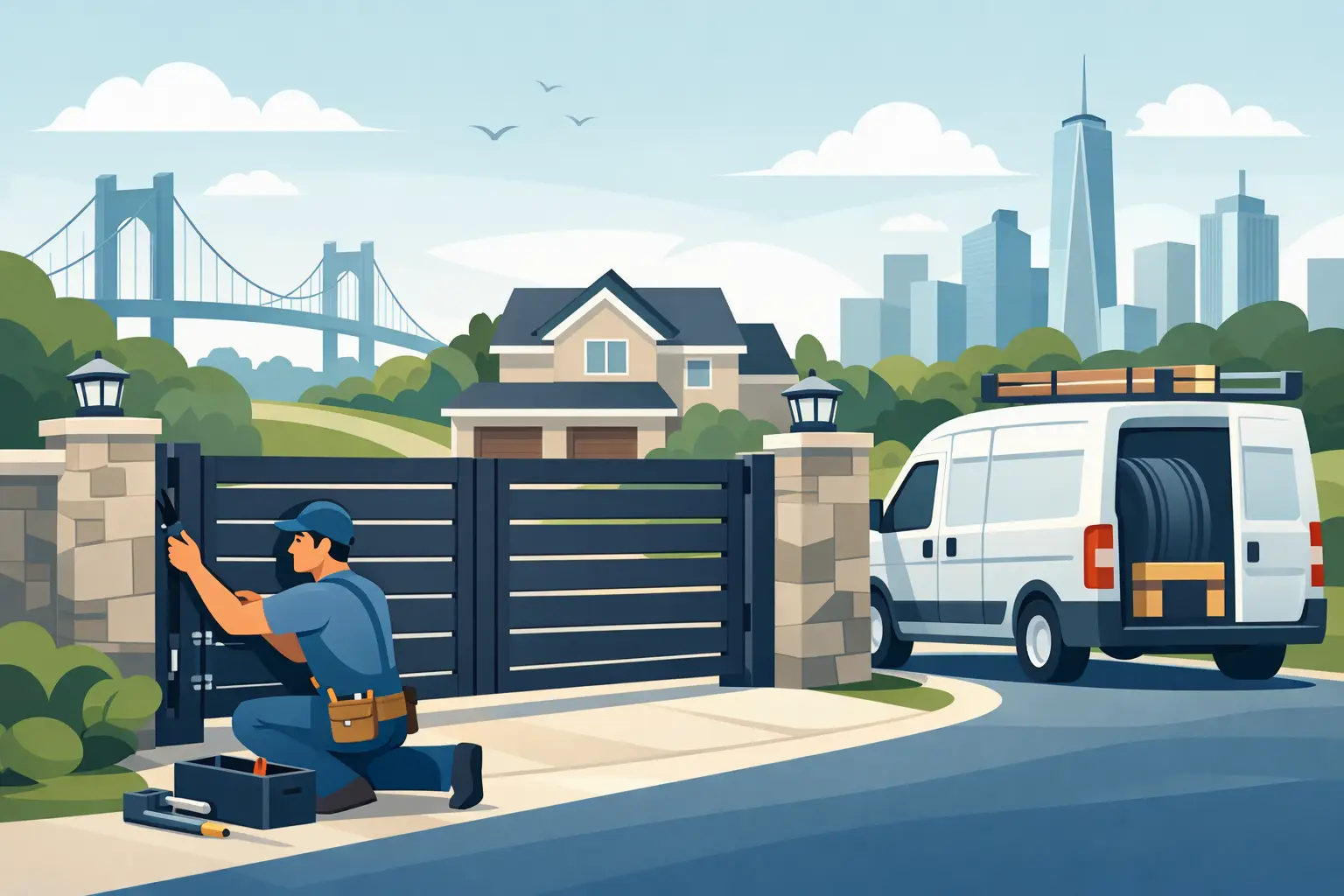
A driveway gate has to do more than look good from the street. It needs to open reliably in winter, stand up to daily use, protect the people and property behind it, and fit the way your household or business actually operates. A well-planned custom driveway gate installation gives New Jersey property owners a clear boundary, better access control, and curb appeal that feels like part of the property, not an afterthought.
For families, that may mean keeping children and pets safely inside the yard. For a business, it may mean controlling vehicle access after hours. The right answer depends on the driveway layout, gate material, terrain, clearance, and whether you want manual or automated operation.
Custom Driveway Gate Installation Starts at the Driveway
The biggest decisions should happen before a gate is built. A gate that is too wide, poorly supported, or placed without considering the slope of the driveway can become difficult to use long before it shows signs of wear.
Start by looking at how vehicles enter and leave the property. A gate should provide enough opening width for the cars, trucks, trailers, delivery vehicles, or service equipment that need to pass through. Residential driveways often need a different opening than commercial entrances, where larger vehicles may need extra turning room and dependable daily access.
Driveway grade matters just as much. A swinging gate needs room to travel without scraping the driveway surface or catching on a slope. If the driveway rises sharply behind the gate line, a sliding gate or a custom design with adjusted clearance may be the better fit. On tighter properties, the available space beside the entrance can determine whether a slide gate is practical.
New Jersey weather also deserves attention. Gate posts and footings need to be set correctly for local ground conditions so they can resist frost movement, shifting soil, and the weight of the gate itself. Heavy gates placed on undersized posts are one of the most common causes of sagging, dragging, and hardware failure.
Before installation, a professional contractor should also consider property lines, underground utilities, drainage, existing fencing, local zoning requirements, and any homeowner association rules. Taking care of these details early helps avoid costly changes after the gate is already in place.
Choosing Between Swing Gates and Slide Gates
Swing gates are a classic choice for many homes because they offer a clean, balanced appearance and can work with wood, vinyl, aluminum, ornamental iron, and composite fencing. A single swing gate works well for narrower openings, while a double swing gate can create an impressive entrance for a wider driveway.
The trade-off is clearance. Swing gates need enough open space inside the property, or occasionally outside it where permitted, to move freely. They can be a strong choice for level driveways with adequate setback from the road.
Sliding gates are often better for sloped driveways, limited swing clearance, or entrances where security and frequent use are priorities. They travel parallel to the fence line rather than opening into the driveway. This can make them especially useful for commercial properties, long private drives, and homes where parked vehicles sit close to the entrance.
A cantilever slide gate is supported above the ground and does not roll on a track across the driveway. That can be helpful where snow, gravel, leaves, or debris would interfere with a ground track. However, it requires additional room along the fence line to accommodate the gate as it opens. A tracked slide gate may require less side room, but the track must be maintained and kept clear.
There is no one-size-fits-all choice. The best gate style is the one that suits the site and continues to work well when the weather turns, the driveway is busy, or visitors arrive after dark.
Materials That Match the Property and the Job
The material should support both the look you want and the level of use the gate will receive. A decorative entrance gate carries a different workload than a security gate that opens multiple times each day.
Wood and cedar gates bring warmth and privacy to traditional homes, wooded lots, and properties with existing wood fencing. They can be custom-built for nearly any style, from simple board designs to more detailed framed gates. Wood does need regular care, including staining or sealing, to protect it from moisture and seasonal movement.
Vinyl gates offer a polished, low-maintenance look and pair naturally with vinyl privacy fencing. They resist rot and do not need painting, but larger vinyl gates require strong internal reinforcement and properly engineered hardware. Without it, a wide gate can flex or sag over time.
Aluminum and ornamental iron provide a more open, refined appearance while giving the entrance a strong sense of definition. These materials work well for estate-style driveways, pool-adjacent areas, and commercial properties where visibility matters. Aluminum is lightweight and resistant to rust, while ornamental iron offers substantial visual presence but may need periodic maintenance to protect its finish.
Composite and Trex-style materials can be a smart option when homeowners want the appearance of wood with less routine upkeep. Chain-link gates, with or without privacy slats, remain a practical choice for secure and budget-conscious residential or commercial entrances. The right selection comes down to privacy needs, maintenance expectations, budget, and how the gate will be used.
Gate Frames and Hardware Matter More Than Most People Expect
Even the best-looking gate can fail if the frame, hinges, rollers, latch, and posts are not matched to its size and weight. Wide gates create leverage, which puts ongoing pressure on every connection point. Professional installation means choosing hardware rated for the specific gate, not using a standard hinge set simply because it is available.
For automated gates, the operator must also be properly sized. An undersized operator may struggle with a heavy gate, particularly during cold weather or after years of use. The goal is steady, controlled operation, not a motor that works at its limit every day.
Access Control Should Fit Your Routine
A manual gate can be the right solution for a low-traffic residential driveway, especially when simplicity and lower upfront cost are the priority. A reliable latch, strong hinges, and an easy-to-use handle may be all that is needed.
For busy households and commercial properties, automation adds convenience and control. Remote controls, keypads, vehicle sensors, intercom systems, telephone entry, and smart access options can all be incorporated into a custom gate system. The best setup depends on who needs access, how often they come and go, and whether deliveries or service vehicles need a simple way to enter.
Automation should never be treated as convenience alone. Gate safety is a serious part of the design. Proper systems include features such as photo eyes, monitored safety edges, obstruction detection, and accessible manual release options for power outages. Gates should be installed and adjusted to reduce pinch points and prevent closing on people, pets, or vehicles.
For families, this is especially important. A driveway gate is not a toy, and children should never be allowed to climb, ride on, or operate it. Clear operating practices and professionally installed safety equipment help protect everyone using the entrance.
What Professional Installation Looks Like
A dependable installation begins with an on-site assessment, not a guess based on a photo. The contractor should measure the entrance, evaluate the grade, identify the gate style, and discuss material and access options. If automation is involved, planning may also include power supply, wiring routes, control locations, and safety devices.
Next comes careful post and footing work. This is the structural foundation of the entire project. Posts need the correct depth, concrete support, alignment, and spacing before the gate is hung. Rushing this stage can lead to problems that no adjustment can fully fix later.
Once the gate is installed, it should be tested through a full range of motion. Swing gates should clear the driveway and latch properly. Slide gates should travel smoothly without binding. Automated systems should be checked for opening speed, closing force, safety reversal, controls, and manual release.
At Northeast Fencing, LLC, custom gate work is approached as part of the full property system. That means considering how the driveway gate connects with the surrounding fence, protects the entrance, and holds up through years of New Jersey weather and everyday use.
Plan for Maintenance Before Problems Start
Every driveway gate needs some attention over time, even low-maintenance materials. Check hinges, latches, rollers, and fasteners periodically for looseness or wear. Keep sliding gate tracks clear of stones, leaves, ice, and debris. Wood gates should be inspected for moisture damage, while metal gates should be checked for scratches or finish damage that could allow corrosion to begin.
Automated systems benefit from regular testing as well. Make sure safety devices are clean and aligned, remotes work consistently, and the gate reverses as intended when an obstruction is detected. If a gate starts dragging, making unusual noises, moving unevenly, or failing to latch, address it early. Small adjustments are usually far easier than repairing a damaged operator, bent frame, or shifted post.
A custom driveway gate should make coming home, opening up for business, and protecting your property feel easier. When the design fits the driveway and the installation is built on solid workmanship, it becomes a useful part of the property every single day.