
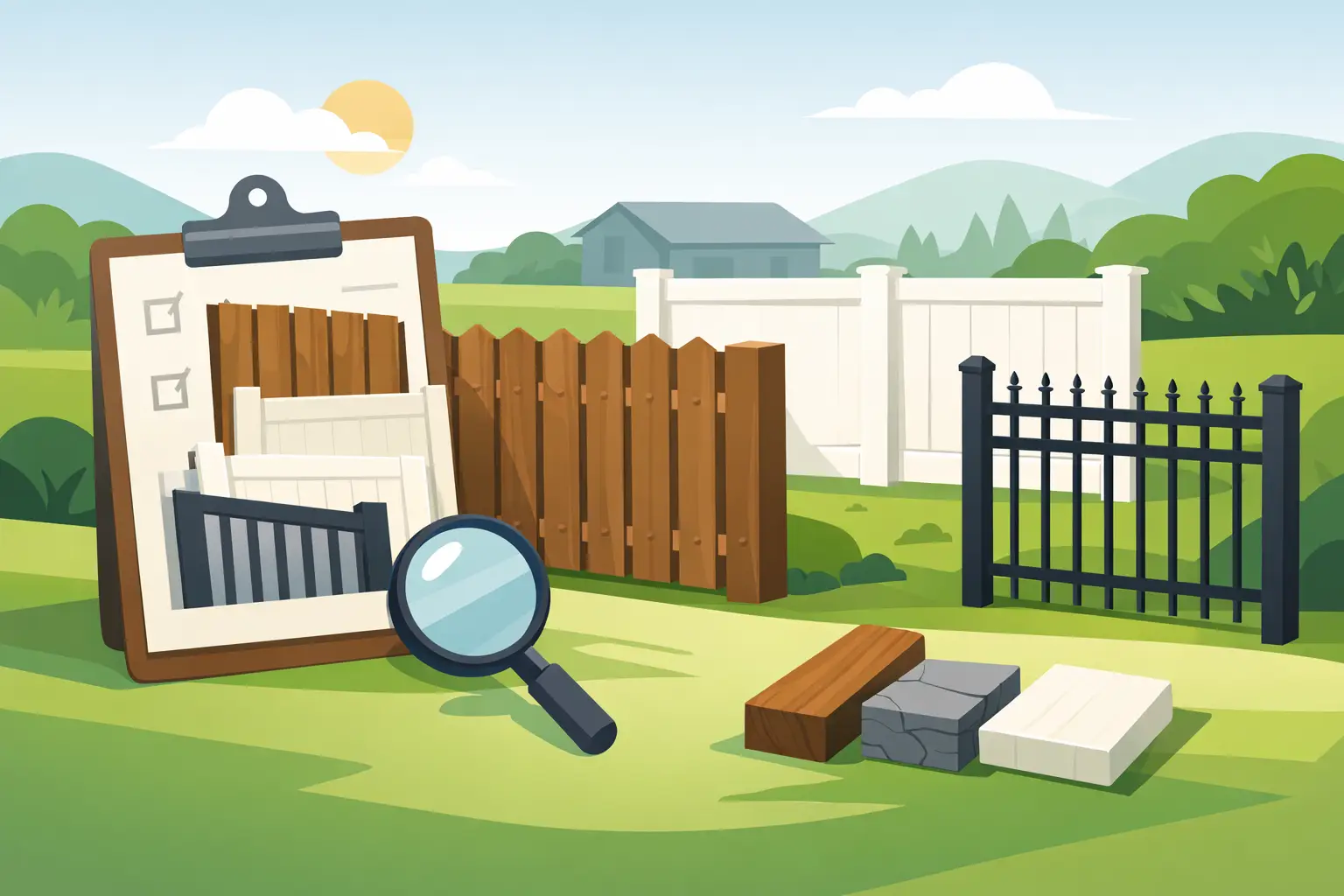
A fence usually looks simple from the street. Then the estimates start coming in, neighbors mention township rules, and suddenly one question matters more than anything else: how to choose fence material for your yard without paying for the wrong solution.
That decision affects more than appearance. The right material helps with privacy, keeps kids and pets safer, holds up through New Jersey weather, and fits your maintenance expectations. The wrong one can leave you with extra repairs, fading, warping, or a fence that never really matched the job in the first place.
How to Choose Fence Material Starts with the Job
Before comparing styles and colors, get clear on what the fence needs to do. A backyard privacy fence has very different demands than a pool enclosure, a front-yard accent fence, or a commercial perimeter.
If privacy is the top priority, solid-panel options like vinyl privacy fencing, wood privacy fencing, and some composite styles usually make the most sense. If you mainly want a clear boundary without closing in the yard, aluminum, chain-link, or post-and-rail may fit better. For security, strength and height matter more than decorative detail. For curb appeal, the material should match the home as much as the property line.
This is where many homeowners save themselves money. When the purpose is clear, the field narrows fast.
Budget Matters, but So Does the Full Lifespan Cost
The cheapest quote is not always the lowest long-term cost. Some materials cost less upfront but need more staining, sealing, repairs, or part replacement over time. Others cost more at installation but stay looking good with far less work.
Wood is a good example. It can be one of the more affordable ways to build a classic privacy fence, especially with pressure-treated pine. But wood generally asks more from the owner over the years. It may need staining or sealing, and it can be affected by moisture, insects, and natural movement.
Vinyl usually costs more upfront than basic wood, but many homeowners prefer it because it is low-maintenance and clean-looking. Aluminum can also be a strong value because it resists rust and holds up well with minimal upkeep. Composite and Trex-style fencing often sit at a higher price point, but they appeal to buyers who want a premium look and less maintenance than traditional wood.
A fair way to compare materials is to ask two questions at once: what will this cost to install, and what will it cost me to live with for the next 10 to 15 years?
Weather in New Jersey Should Influence Your Choice
Fence materials do not perform the same in every climate. In New Jersey, fences deal with humidity, rain, snow, freeze-thaw cycles, summer heat, and coastal effects in some areas. That makes durability a practical issue, not just a sales talking point.
Wood can look excellent here, but it needs proper installation and ongoing care to manage moisture exposure. Cedar offers natural resistance and a more premium appearance, while pressure-treated pine is a budget-friendly workhorse. Vinyl handles moisture well and does not attract insects, which is a major reason it remains popular for residential yards. Aluminum is another strong option for local conditions because it resists rust better than many homeowners expect and works especially well on decorative and pool fence applications.
Chain link remains one of the most durable and cost-effective choices for utility, pet containment, and many commercial uses. If appearance is a concern, privacy slats can improve the look while adding screening. Ornamental iron has a strong, high-end appearance, but it typically requires more attention to prevent corrosion than aluminum alternatives.
How to Choose Fence Material by Maintenance Level
Some homeowners do not mind weekend upkeep. Others want a fence they can rinse off and forget about. Neither approach is wrong, but it should shape your decision.
Wood offers warmth and natural character that many people still prefer over manufactured materials. The trade-off is maintenance. Depending on the species, finish, and exposure, wood may need regular sealing, staining, cleaning, and occasional board replacement.
Vinyl is one of the easiest materials to maintain. It does not need painting, and routine cleaning is usually enough to keep it looking sharp. Aluminum is similarly low-stress, which is why it works well for busy households and property owners who want long-term performance without a long to-do list.
Composite fencing also appeals to low-maintenance buyers, though the upfront investment is higher. Chain link is generally easy to live with from a maintenance standpoint, but it is chosen more for function than for a polished backyard look.
If you already know you will not keep up with staining or repairs, that is useful information. Choose the material that matches real life, not best-case intentions.
Privacy, Pets, Pools, and Security All Change the Answer
A family with a dog has different fence priorities than a homeowner trying to dress up a front lawn. A pool fence has legal and safety requirements that go beyond style. A business property may need visibility, access control, and durability first.
For backyard privacy and pet containment, solid vinyl and wood are often the leading choices. They create separation, reduce sightlines, and help define the space clearly. For pool areas, aluminum is a common favorite because it offers security, visibility, and a clean appearance while meeting many code-related needs when properly designed and installed.
For decorative front-yard fencing, aluminum, ornamental styles, and certain wood designs can add curb appeal without making the home feel closed off. For agricultural or larger open properties, post-and-rail gives a classic boundary solution, though it does not provide privacy or full containment without added wire.
For commercial settings, chain link, security gates, aluminum, and stronger perimeter systems are often the better fit because they prioritize function, controlled access, and durability.
Appearance Should Match the Property, Not Fight It
A fence should look like it belongs there. That means considering your home’s siding, trim, landscaping, lot size, and the character of the neighborhood.
Wood has a timeless look that works with many home styles, from traditional colonials to more rustic properties. Cedar tends to offer a richer, more upscale appearance than basic pine. Vinyl gives a crisp, uniform finish that many homeowners like for clean-lined suburban properties. Aluminum works especially well when you want elegance without visual heaviness. Composite can provide a more premium, contemporary feel.
This is one area where seeing samples matters. A color or material that sounds right on paper can feel too stark, too busy, or too industrial once it is compared against the house itself.
Local Rules and Layout Can Narrow Your Options
Even the best material choice has to work with the property and local requirements. In many New Jersey towns, fence height, placement, pool enclosure standards, and corner-lot visibility rules can affect what is allowed.
Slope is another real factor. Some materials and fence styles adapt more naturally to uneven grades than others. If the yard is sloped, you may need to choose between a stepped appearance and a fence that follows the contour more closely. Soil conditions, gate placement, tree roots, and property lines also influence the right system.
This is where working with an experienced local installer helps. A good recommendation is not just about material quality. It is about choosing something that suits the site, the code requirements, and the way the fence will actually be used.
A Practical Way to Narrow Your Decision
If you are still weighing options, start by ranking these priorities: privacy, maintenance, appearance, budget, and security. Put them in order. That exercise usually clarifies the best material faster than comparing every product on the market.
If privacy and low maintenance are first, vinyl is often worth a serious look. If natural appearance matters most, wood may still be the right answer. If you want an open, elegant look with durability, aluminum is hard to beat. If value and function come first, chain link remains a dependable option. If you want a premium fence with reduced upkeep, composite deserves consideration.
For homeowners across New Jersey, the best choice is rarely the trendiest one. It is the material that fits the property, the family, and the amount of upkeep you realistically want to handle. That is how Northeast Fencing, LLC approaches fence recommendations—practical first, attractive always, and built to last.
The right fence material should make your life easier every time you pull into the driveway, let the dog out, or spend time in the yard. When the material fits the job, you stop thinking about the fence and simply enjoy what it does for your property.