
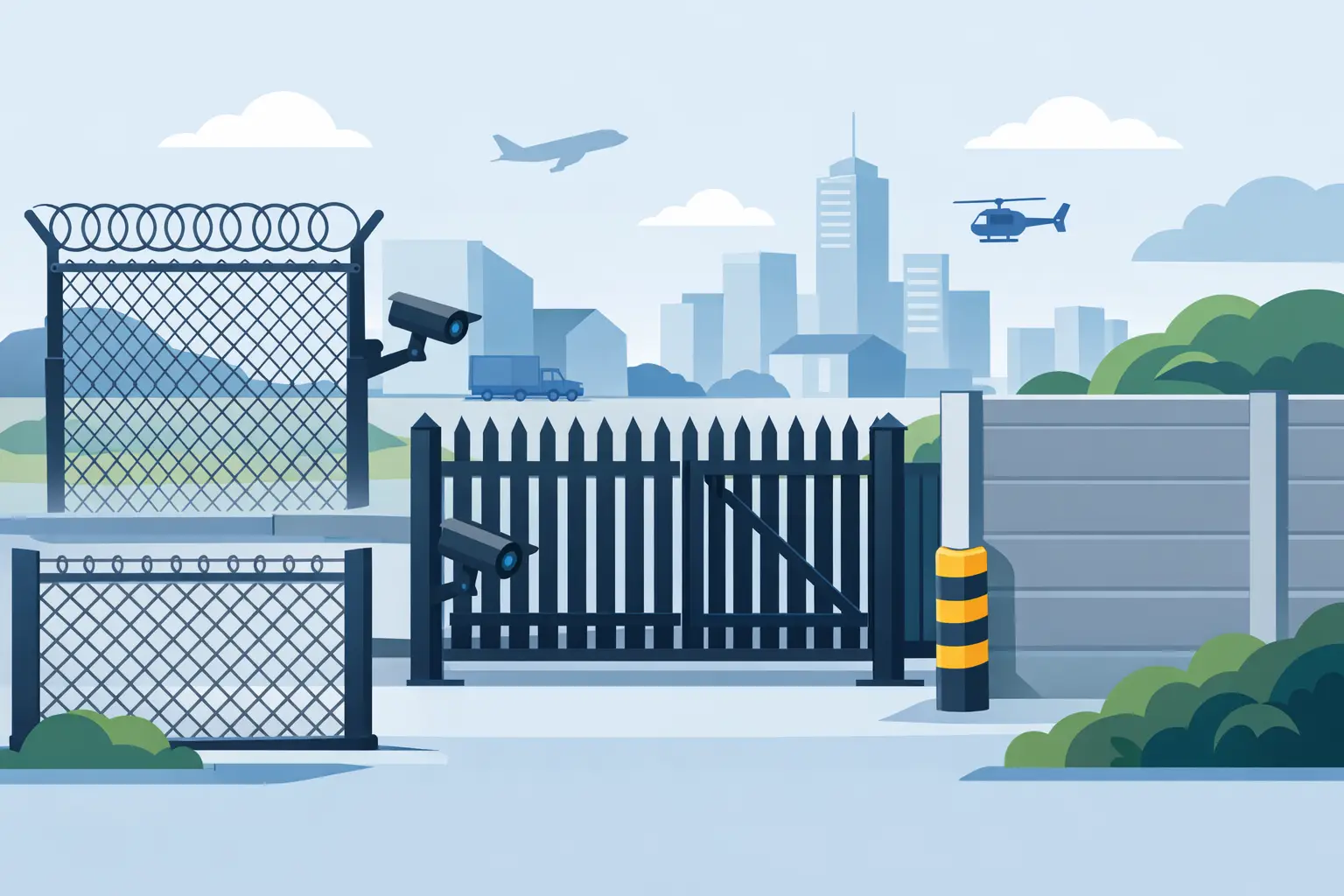
A commercial property is only as secure as its weakest access point. The right commercial security fencing options help New Jersey businesses control entry, protect equipment, define boundaries, and give employees and customers a clearer sense of safety from the moment they arrive.
For a warehouse, contractor yard, school, apartment complex, utility area, or retail property, the best fence is rarely chosen on appearance alone. Security needs, traffic patterns, local requirements, visibility, budget, and long-term maintenance all matter. A fence that looks good but leaves a vulnerable gate or exposed service area may not solve the actual problem.
Start with the Risk, Not the Material
Before selecting a fence, consider what the property needs to protect. A storage yard with valuable tools and vehicles has different concerns than a medical office, restaurant patio, or multifamily community. Some sites need a visible boundary and controlled vehicle access. Others need privacy around dumpsters, HVAC equipment, loading areas, or employee parking.
Also consider when the property is most exposed. If activity continues after business hours, a taller perimeter fence, secure gate hardware, and lighting coordination may be more valuable than decorative upgrades. If customers approach the building throughout the day, a professional-looking ornamental fence at the front and a more utilitarian security fence at the rear can be a practical combination.
Security fencing works best as part of a complete site plan. Cameras, lighting, locks, access controls, landscaping, and gate placement should support the fence rather than work against it. A local fencing contractor can help identify where a stronger material, different height, or custom gate would make the biggest difference.
Chain Link Fencing for Commercial Perimeters
Chain link remains one of the most common commercial security fencing options because it is durable, cost-effective, and adaptable to many property layouts. It is a strong choice for warehouses, industrial facilities, construction yards, athletic areas, utility locations, parking lots, and equipment storage areas.
Commercial chain-link fencing can be built in different heights, wire gauges, and framework strengths. These details matter. A basic light-duty fence may be suitable for a low-risk boundary, while a property with frequent vehicle activity or higher-value assets may need heavier posts, rails, fabric, and gate components. The installation below ground is just as important as what is visible above it. Properly set posts and well-built corners help the fence handle weather, use, and pressure over time.
When Privacy Slats Make Sense
Privacy slats can be added to chain-link fencing when a business needs more screening without moving to a completely solid fence. They are useful around storage areas, construction materials, dumpsters, back-of-building service zones, and properties close to neighboring homes.
There is a trade-off. Slats improve privacy, but they also catch more wind than open chain link. The fence framework must be designed for that added load, especially in exposed locations. Businesses should also confirm whether total fence height and screening are permitted for their specific property and municipality.
Ornamental Steel and Aluminum for Visible Entrances
For commercial properties where curb appeal and security must work together, ornamental steel-style fencing and aluminum fencing are strong options. They are often used at office buildings, schools, apartment communities, medical facilities, churches, retail centers, and professionally maintained properties.
Ornamental fencing creates a clean, established appearance while maintaining visibility through the pickets. That visibility can be valuable at entrances and parking areas, where staff or security cameras need a clear view of activity. Higher picket styles and properly secured gates can add a stronger deterrent without making the property feel closed off.
Aluminum fencing is resistant to rust and works particularly well around landscaped frontage, pools, walkways, and lower-impact boundaries. It is not always the best choice for a high-abuse industrial perimeter, where heavier commercial chain link or steel components may be more appropriate. The right selection depends on whether the site’s priority is appearance, physical resistance, privacy, or all three.
Solid Privacy Fences for Screening and Control
Vinyl, composite, and wood privacy fencing are often used to screen commercial service areas rather than secure an entire high-risk perimeter. They can provide a polished solution for restaurant patios, apartment trash enclosures, office-side equipment, daycare play areas, and commercial properties bordering residential neighborhoods.
Vinyl offers a clean, low-maintenance appearance and does not require painting. Composite fencing can provide a refined look with strong long-term durability. Wood, including cedar, can bring warmth and privacy to a property, though it needs more ongoing care than vinyl or composite in New Jersey’s changing weather.
A solid privacy fence should not be treated as automatically more secure. Its main advantage is screening. Depending on design and construction, it may not resist impact or climbing as effectively as a purpose-built commercial chain-link system with the right security features. For many businesses, the better approach is to use privacy fencing where appearance and screening are needed, then use stronger perimeter security materials where access control matters most.
Gates Are the Most Important Part of the Fence
A secure fence with a poorly designed gate leaves the property exposed. Commercial gates should be chosen based on the way people, vehicles, deliveries, and emergency services need to move through the site.
Swing gates can work well for controlled entrances with enough clearance. Cantilever gates are often a good fit for wider driveways because they slide without a ground track across the opening. Rolling gates may suit other layouts, although they require a clear path along the fence line. Pedestrian gates should be placed where employee access can be observed and managed, rather than creating an easy shortcut around the main entry.
Gate posts, hinges, rollers, latches, and locking hardware need to match the size and weight of the gate. This is not a place to cut corners. A sagging gate can quickly become a daily frustration and a security concern. For properties that need frequent access, automated operators, keypad entry, card readers, intercoms, or remote controls may be worth considering. These systems should be planned early so power, safety devices, and access needs are accounted for during installation.
Height, Visibility, and Local Requirements
Taller fencing can be an effective deterrent, but height alone does not create a secure property. A six-foot fence may be sufficient for a low-traffic storage area, while a more sensitive site may require greater height, stronger materials, or added security features. The best approach depends on the property’s risk level, neighboring uses, and local regulations.
New Jersey municipalities may have different rules for fence height, setbacks, corner visibility, gates, and fencing near public rights-of-way. Commercial properties may also have site plan requirements, landlord restrictions, or utility easements that affect where a fence can be installed. Confirming these details before construction helps avoid expensive changes later.
Visibility deserves equal attention. Fully opaque fencing protects privacy, but it can create hidden areas around the property. In some cases, a more open fence combined with lighting and cameras provides better oversight. In other cases, screening a particular service area is exactly what the business needs. Good fence planning balances privacy with the ability to monitor the site.
Plan for Maintenance Before Installation
Commercial fencing is an investment, and routine attention helps protect it. Gates should be checked for alignment, latches should close securely, and any impact damage should be repaired before it spreads. A damaged section can weaken a larger perimeter and signal that the property is not actively maintained.
Chain link may need occasional tensioning or repair after vehicle contact. Wood fencing may need cleaning, staining, or replacement of individual boards over time. Vinyl and aluminum generally require less upkeep, but gates and hardware still need inspection. For busy properties, choosing materials with realistic maintenance needs is often more cost-effective than selecting the lowest initial price.
Northeast Fencing, LLC helps commercial property owners across New Jersey evaluate materials, build dependable perimeters, repair damaged fencing, and create custom gate solutions that fit the way a site operates. The goal is not simply to install more fence. It is to build a boundary that performs reliably every day.
A good commercial fence should make access easier to manage, protect what matters on the property, and hold up through years of use. Start with the risks on your site, then choose the material and gate system that gives your business practical protection without creating unnecessary maintenance or disruption.