
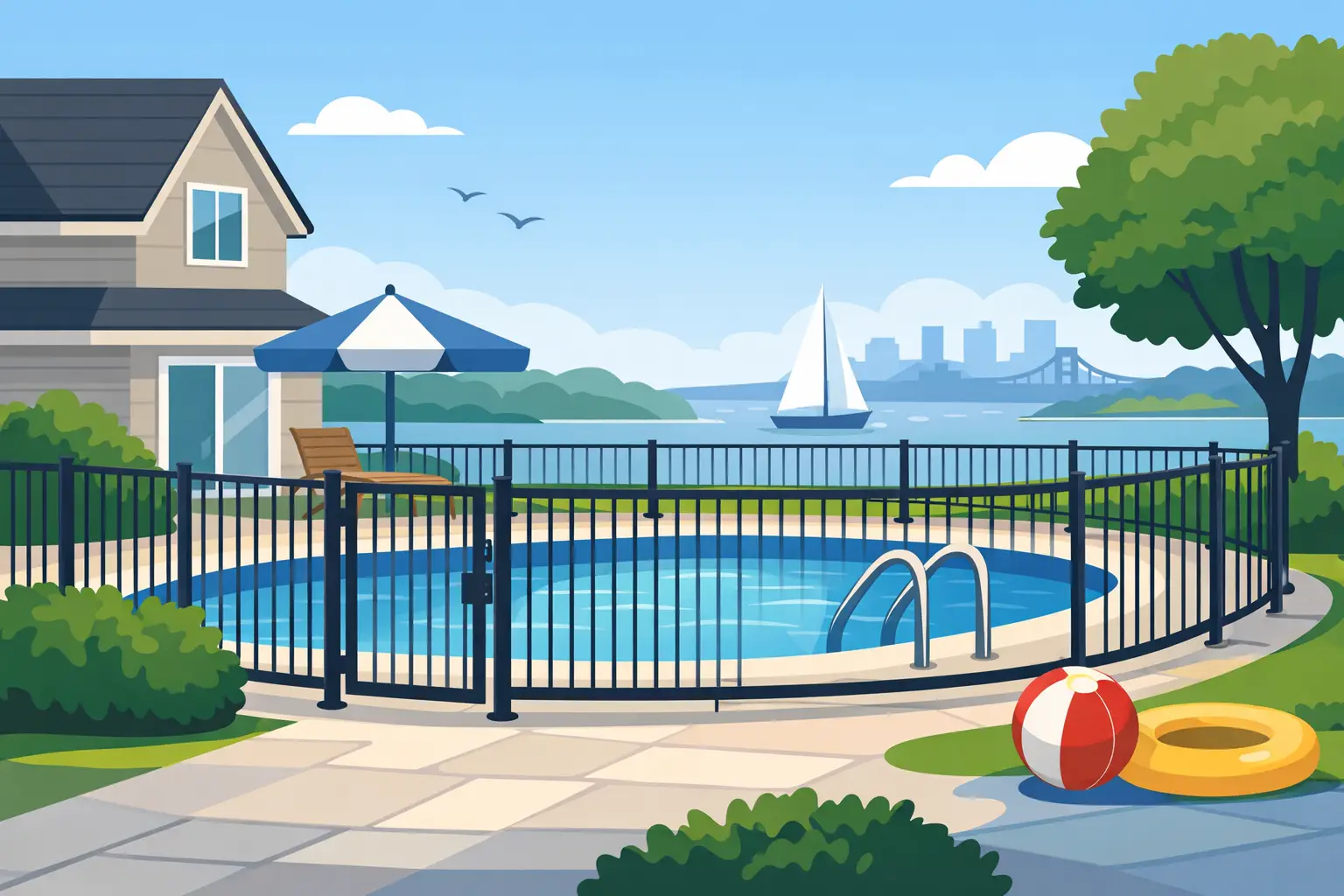
A pool can turn a backyard into the place everyone wants to be. It also creates a serious safety responsibility. Understanding pool fence requirements New Jersey homeowners may face before construction begins can prevent expensive corrections, failed inspections, and, most importantly, an avoidable accident.
For most New Jersey properties, a pool barrier is not simply a decorative fence around the water. It is a safety system designed to limit unsupervised access by children and keep the pool area controlled. The right material, height, gate hardware, placement, and permit process all matter.
Pool Fence Requirements in New Jersey: The Practical Baseline
New Jersey pool-barrier rules are generally enforced through the Uniform Construction Code, along with requirements set by your local construction office. Residential pool projects commonly follow building-code provisions based on the International Residential Code, but municipalities can have local procedures, zoning rules, and inspection requirements that affect the final plan.
A code-compliant barrier is commonly required around in-ground pools and many above-ground pools. The exact trigger can depend on the pool's depth, permanent structure, and whether it meets the code definition of a swimming pool. Do not assume a temporary-looking pool is exempt. If the water depth or installation type brings it within local code, a barrier and permit may be required.
The most common baseline is a barrier at least 48 inches high, measured on the side facing away from the pool. That height is meant to make climbing or reaching the pool area more difficult for a young child. A four-foot privacy fence may appear sufficient at first glance, but compliance depends on more than the overall panel height.
Openings matter just as much. In many standard pool-barrier designs, openings cannot allow the passage of a 4-inch sphere. This rule applies to spaces between pickets, beneath the fence, and around gates. If the ground slopes, washes out, or leaves a larger gap under the fence after installation, the barrier may no longer perform as intended.
Gates Need More Than a Lock
A pool gate is often the most closely inspected part of the enclosure. Pedestrian gates are typically required to be self-closing and self-latching, so they return to a secured position without someone remembering to close them. The gate should generally swing away from the pool area, not toward it.
Latch placement is also critical. A low, easily reached latch on the outside of a gate can defeat the purpose of the barrier. Code provisions often address latch height and placement, particularly when the release mechanism is located on the pool side of the gate. Your installer should select hardware that works with the fence style while meeting the applicable safety rules.
Drive gates can create another issue. A double gate or wide access gate may be convenient for equipment, landscaping, or pool service, but it must remain secure when not in use. Depending on the layout, it may need self-latching hardware, locking arrangements, or a separate code-compliant pedestrian gate.
Choosing a Fence That Can Meet the Requirement
The best pool fence is not always the tallest or most expensive one. It is the one that fits your yard, meets local requirements, holds up to New Jersey weather, and does not create easy footholds for climbing.
Aluminum fencing is a popular choice around pools because it is clean-looking, low maintenance, and available in configurations designed for pool safety. Its open-picket appearance preserves sightlines from the patio or kitchen, making it easier to keep an eye on activity around the water. For many homeowners, that visibility is a major advantage over a solid privacy fence.
Vinyl fencing can work well for privacy and can be configured as a compliant pool barrier when installed with the correct height, ground clearance, and gate hardware. It offers a polished appearance and does not require regular painting or staining. However, a solid vinyl fence can block views of the pool area, so families with young children should think carefully about supervision before choosing a fully enclosed privacy design.
Chain link can be an affordable, durable solution, especially for larger yards or commercial properties. Standard chain-link mesh and gate details must be evaluated carefully because pool rules can limit opening sizes and climbing opportunities. Privacy slats may improve appearance, but they do not automatically make a chain-link fence compliant.
Wood and composite fencing can provide privacy and strong curb appeal, but their layout matters. Horizontal rails on the outside of the barrier can create climbable surfaces if they are positioned incorrectly. A knowledgeable local fence contractor can recommend a design that supports both the look you want and the safety performance the pool area needs.
Permits, Zoning, and Inspections Before Installation
A fence that looks excellent can still become a problem if it is placed in the wrong location or installed before permits are approved. In New Jersey, pool work commonly involves permits and inspections, and the fence may be reviewed as part of the overall pool-barrier plan.
Your municipality may ask for a survey, site plan, pool location, fence layout, gate locations, and equipment placement. Setback rules can affect how close a pool or fence may be to property lines, sidewalks, easements, septic systems, or other structures. Corner lots and properties with unusual grades often require extra planning.
Do not rely on a neighboring fence as your pool enclosure without confirming that it qualifies. A shared property-line fence may be too short, have gaps, include an unsecured gate, or fall outside the area required to isolate the pool. It can also be changed or removed by the neighbor in the future. A dedicated pool barrier is often the safer long-term choice.
Before moving forward, homeowners should confirm four practical details with the local construction office and their fencing professional:
- Whether the pool type and water depth require a permit and barrier.
- The required barrier height, clearance, opening size, and gate hardware for that property.
- Required setbacks, zoning approvals, and any homeowner association restrictions.
- When the final barrier inspection must occur before the pool is used.
Local confirmation is worth the extra call. Code editions, municipal enforcement practices, and site-specific conditions can change what is accepted on a particular project.
Common Pool Fence Mistakes That Create Safety Problems
The most frequent issue is treating the fence as an afterthought. A pool contractor may focus on excavation, decking, plumbing, and equipment while the homeowner assumes any existing yard fence will satisfy the barrier requirement. That assumption can delay the project at the inspection stage.
Another common problem is installing a gate without reliable self-closing and self-latching hardware. Springs loosen, hinges shift, and a gate that once closed properly may stop latching after a season of use. Test the gate regularly, especially after winter, landscaping work, or a heavy storm.
Gaps under a fence are also easy to overlook. Uneven grades are common throughout Middlesex County, Union County, and surrounding New Jersey communities. A fence must follow the slope without leaving accessible openings below the panels. In some yards, that requires stepped sections, racking panels, added grade work, or a custom bottom treatment.
Finally, avoid placing climbable items beside the barrier. Patio furniture, storage boxes, grills, planters, stacked firewood, and even a child's playset can turn a properly built fence into an easier route into the pool area. Keep the outside of the barrier clear and treat that space as part of the safety plan.
Plan for Safety Without Giving Up Your Backyard
Pool fencing should feel like a finished part of the property, not a last-minute obstruction. A well-designed aluminum enclosure can frame the pool without blocking the yard. A vinyl or composite design can create privacy where homes are close together. Custom gates can make room for service access while keeping the everyday entry point secure.
The trade-off usually comes down to visibility versus privacy, budget versus material longevity, and a standard layout versus custom work for a challenging grade. There is no single fence material that is right for every New Jersey pool. The right choice begins with code-aware measurements and ends with a barrier your family can use confidently for years.
For homeowners who want clear answers before the first post is set, Northeast Fencing, LLC can help evaluate the yard, recommend suitable materials, and build a pool enclosure with safety, appearance, and dependable workmanship in mind. A properly planned fence lets the good part of pool ownership take center stage: time outside with the people you want to protect.