
A fence has to do more than mark a property line. For New Jersey homeowners, it often needs to give kids a safer place to play, keep dogs contained, create privacy from close neighbors, and still look right with the home. That is why modern fence design trends are less about chasing a passing style and more about choosing a clean, durable design that works for the way you actually use your yard.
The strongest projects combine practical layout decisions with materials that hold up through humid summers, heavy rain, winter freeze-thaw cycles, and everyday family life. A beautiful fence is a good investment only when it is also built to stay straight, secure, and functional for years.
Clean Lines Are Replacing Overly Decorative Designs
Modern fencing tends to favor simple, intentional profiles. Homeowners are moving away from busy lattice patterns, ornate caps, and multiple decorative elements in one fence run. Instead, they are choosing flat-top panels, evenly spaced boards, streamlined gates, and consistent heights that make the entire yard feel more organized.
This does not mean every fence needs to look minimal. A traditional Colonial, ranch, or brick home can still benefit from a more classic fence style. The modern approach is to keep the design balanced with the architecture rather than adding details that compete with it. A clean white vinyl privacy fence can complement a traditional home just as well as a horizontal cedar fence complements a contemporary exterior.
For front yards and visible side yards, aluminum and ornamental iron remain popular because they offer definition without closing off the view. Their narrow rails and open pickets create a polished boundary while allowing landscaping, stonework, and the home itself to remain visible.
Horizontal Privacy Fences Create a Custom Look
Horizontal boards are one of the most recognizable modern fence design trends, especially around patios, pools, and backyard entertaining areas. The long, level lines make a yard feel wider and give a fence a more tailored appearance than a standard vertical-panel design.
Cedar is a natural fit for this look. It has warmth, character, and a high-end finish when properly installed and maintained. Composite and Trex-style materials can deliver a similarly updated appearance with less ongoing upkeep, making them a strong option for homeowners who want the look of wood without regular staining or sealing.
There are trade-offs. Horizontal fencing requires careful installation because every board line needs to stay level across the run. Wood also expands, contracts, and weathers over time. For a lower-maintenance privacy option, vinyl panels with a contemporary flat-top profile may be a better fit. The right choice depends on whether your priority is natural texture, long-term maintenance savings, or a specific color and finish.
Privacy Is Getting More Intentional
Privacy is still one of the top reasons New Jersey homeowners install a fence, but solid walls of fencing are no longer the only answer. Many property owners are using privacy strategically: full-height solid panels where neighboring windows look into the yard, then more open fencing along less exposed property lines.
This approach can improve the look of the lot and may help manage project costs. For example, a homeowner may use vinyl privacy fencing around a patio and backyard seating area while installing aluminum fencing along a wooded rear line or a front-facing section. The result is a yard that feels protected without appearing boxed in.
Decorative privacy accents are also gaining traction. A short section of lattice, a framed top rail, or a contrasting gate can add visual interest without overwhelming the design. These details work best when they are used sparingly. One well-placed accent looks custom. Too many can make the fence feel dated or disconnected from the home.
Mixed Materials Bring Contrast Without Clutter
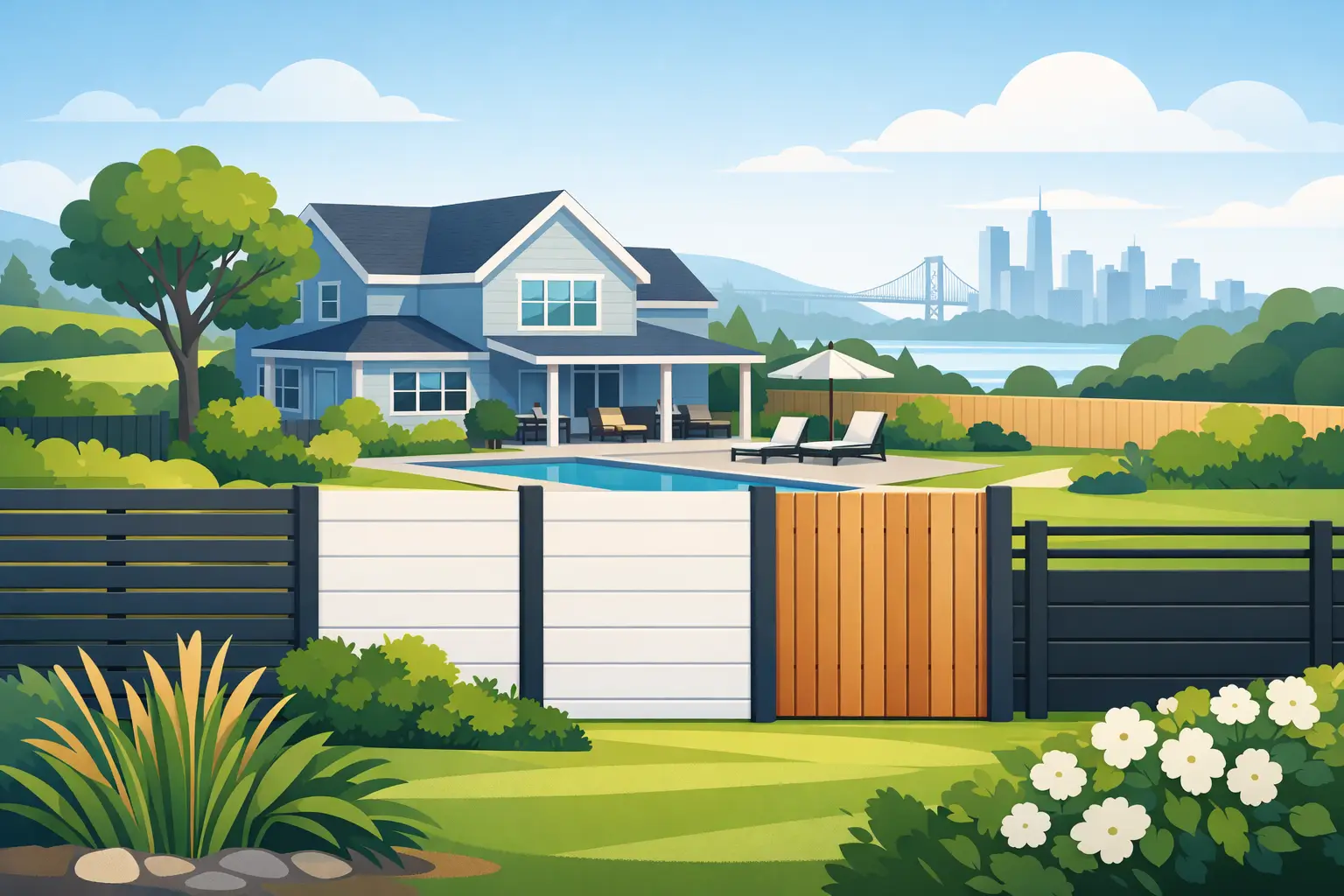
The most successful mixed-material fences keep the palette simple. Black aluminum paired with warm wood, a vinyl privacy fence with a decorative gate, or a composite screen set against masonry can create contrast that feels intentional.
Black is particularly popular for gates, hardware, aluminum fencing, and ornamental iron. It works with white siding, brick, stone, gray exterior colors, and natural landscaping. It also creates a crisp outline around pool areas and garden spaces. However, black fencing can show pollen, dust, and water spots more easily than lighter vinyl, so homeowners should consider how much routine cleaning they are comfortable doing.
Wood-and-metal combinations are another strong option for modern backyards. Black metal framing with cedar infill boards can create a distinctive custom look, though it generally comes at a higher price point than a standard prebuilt panel system. It is best suited for focal areas where design matters most, such as a patio enclosure, entry gate, or highly visible side yard.
Gates Are Becoming Part of the Design
A gate should not be treated as an afterthought. Modern fence projects increasingly use wider walk gates, double gates for equipment access, and custom gate details that match the fence rather than looking like an add-on.
For families, self-closing and self-latching gates can be especially valuable around pools and play areas. Pet owners often benefit from gate placement that creates a simple path from the house to the enclosed yard without leaving a weak point near the driveway. Commercial properties may need heavier-duty gates and access solutions designed for traffic, security, or service vehicles.
The details matter here. Gate posts need the right support, hinges must be sized for the gate weight, and latches need to be easy to use while staying secure. A good-looking gate that drags, sags, or will not latch properly quickly becomes a daily frustration.
Low-Maintenance Materials Remain a Practical Priority
Modern design does not have to mean high maintenance. Vinyl fencing continues to be a favorite across New Jersey because it offers privacy, clean lines, and easy care. It does not require painting, and occasional washing is usually enough to keep it looking fresh. White remains a classic choice, while tan, gray, and wood-tone options can work well with more contemporary exterior palettes.
Aluminum fencing is another low-maintenance option, particularly for pools, sloped yards, and properties where visibility matters. It will not provide privacy by itself, but it is durable, elegant, and generally easier to adapt to changes in grade than many rigid fence styles.
Composite fencing offers excellent durability and a more substantial appearance, but it often carries a higher upfront cost. Pressure-treated pine can be more budget-friendly, especially for larger yards, although it needs maintenance to preserve its appearance and extend its lifespan. There is no single best material for every property. The best fence is the one that meets your safety, maintenance, budget, and design priorities at the same time.
Pool Fencing Is Blending Safety with Curb Appeal
Pool fencing has clear safety requirements, but it does not have to look institutional. Black aluminum pool fencing remains a leading choice because it provides a clean sightline to the pool while establishing a secure barrier. Many homeowners pair it with landscaping, pavers, and coordinated gates to make the enclosure feel like part of the outdoor living space.
Before choosing a pool fence, confirm the applicable local requirements for height, spacing, gate operation, and placement. Rules can vary by municipality, and a professional installer can help plan a fence that supports both safety and a finished appearance.
Good Design Begins with the Property Itself
A fence design that looks great online may not be right for your lot. Corner properties, slopes, mature trees, drainage paths, utility locations, and neighboring fences all affect the best material and layout. The same is true for local zoning rules, property lines, and permit requirements.
Start by thinking about the daily use of your space. Do you need a secure dog run? More privacy around a deck? A safe pool enclosure? A durable commercial perimeter? Those answers should guide the design before color, caps, or decorative accents enter the conversation.
For homeowners who want a fence that feels current without becoming dated, the safest direction is simple: choose quality materials, clean proportions, a functional gate plan, and a style that belongs with your home. Northeast Fencing, LLC helps New Jersey property owners turn those decisions into well-built fences that protect the space and improve the way it looks every day.