
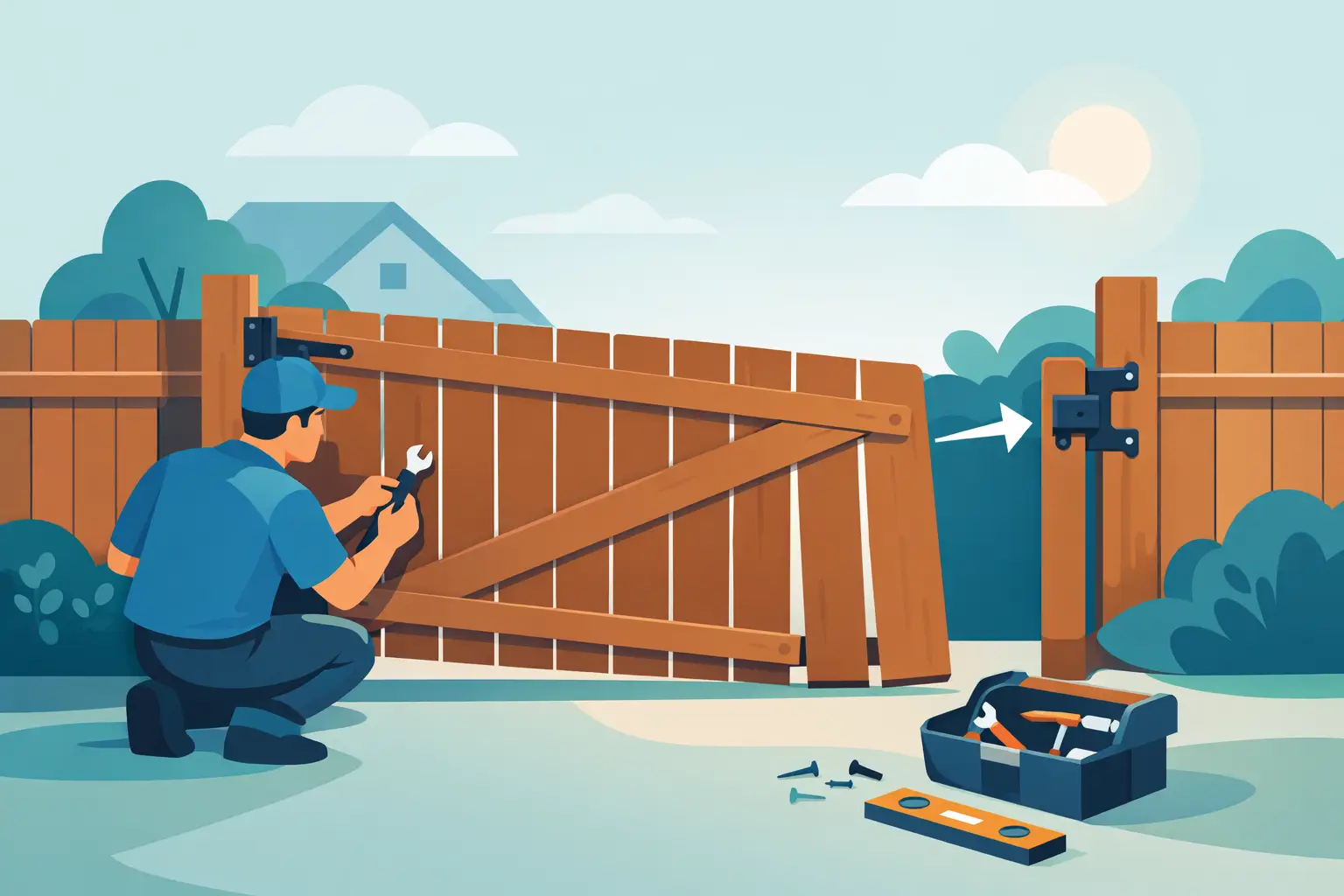
A gate that drags across the ground or refuses to meet the latch is more than an annoyance. It can leave a pool area, pet run, backyard, or commercial perimeter less secure than it should be. Knowing how to fix sagging gate issues starts with finding out what is moving: the gate itself, the hinges, the post, or all three.
For many New Jersey properties, the problem develops gradually. Seasonal ground movement, rain, freeze-thaw cycles, heavy use, and a gate that was never properly supported can pull a once-straight opening out of alignment. A quick adjustment may solve a minor issue. A gate attached to a leaning or deteriorated post needs a more lasting repair.
Start by Finding the Cause of the Sag
Open the gate halfway and look at the gaps around it. A healthy gate should have consistent clearance at the hinge side, latch side, and bottom. If the latch-side corner is low and the gate scrapes the ground, the gate frame is usually sagging under its own weight. If the entire gate is tilted, the hinge post may be leaning or shifting.
Check the hinges next. Loose screws, missing bolts, cracked welds, bent hinge straps, or hinges pulling away from the post can all create a visible drop. On wood gates, fasteners often loosen after repeated swelling and drying. On vinyl, aluminum, and composite gates, hardware can loosen if it was not secured to reinforced framing. Chain-link gates can sag when the hinge bands, post fittings, or frame connections are worn.
Then inspect the post at ground level. Push firmly against it. A sound gate post should feel solid, with little to no side-to-side movement. If it rocks, leans, has rot near the soil line, or has cracked concrete around its base, adjusting the gate will only mask the real problem.
Check Whether the Gate Is Too Heavy
A gate can be built square and still sag if it is undersized for its weight. This is common with wide wood privacy gates, solid cedar gates, gates with decorative inserts, and gates carrying additional hardware such as self-closing hinges or locks.
The wider the opening, the more leverage the gate puts on its hinges and post. A single, heavy gate over a long span may need a stronger frame, larger posts, upgraded hinges, or a double-gate layout. Adding more screws to weak hardware will not correct a gate that exceeds what its support system can carry.
How to Fix a Sagging Gate When the Hinges Are Loose
If the post is solid and the gate frame is still square, hinge maintenance may be all you need. Start by supporting the latch-side bottom corner of the gate with a sturdy block, shim, or adjustable support. Raise it until the gate is level and the latch aligns with the strike.
Tighten every hinge screw, bolt, nut, and mounting bracket while the gate is supported. Replace rusted or stripped fasteners rather than trying to reuse them. For a wood post, longer exterior-rated structural screws may provide a secure hold if the existing screws no longer grip. Do not use ordinary drywall screws outdoors. They can snap and corrode quickly.
If wood around a hinge is split or severely stripped, remove the hinge and repair the mounting area before reinstalling it. Depending on the damage, that may mean filling a small stripped hole with an exterior-grade wood repair or shifting the hinge position to sound material. Large cracks or soft, decayed wood point to a post or gate-frame replacement, not a hardware-only fix.
Once the hardware is secure, remove the support and test the swing. The gate should open without dragging and should close without lifting it by hand. Make small hinge adjustments as needed, then confirm the latch catches cleanly.
Add Bracing to a Wood Gate Frame
A rectangular wood gate naturally wants to turn into a parallelogram over time. That is why a proper diagonal brace matters. The brace transfers the load of the heavy latch-side corner back toward the hinge side.
For a traditional wood brace, install it from the lower hinge-side corner up to the upper latch-side corner. The lower hinge side carries the weight, allowing the diagonal member to support the far upper corner and resist sag. Use weather-resistant lumber and exterior-rated fasteners, and make sure the gate is square before securing the brace.
A tension-style anti-sag cable works differently. Its cable generally runs from the upper hinge-side corner down to the lower latch-side corner. Tightening the cable lifts the sagging latch side. These kits can be useful on lighter wood gates with a structurally sound frame, but they are not a cure for rot, a loose post, or a badly twisted gate.
Before installing any brace, measure the gate diagonally from corner to corner. Equal diagonal measurements indicate a square frame. If one diagonal is longer, use a temporary clamp or support to gently bring the frame back into square before fastening the brace or tensioning the cable.
Do Not Overtighten an Anti-Sag Cable
Overtightening can rack the gate in the opposite direction, bind the hinges, or stress the frame. Make a few turns, test the gate, and adjust gradually. The goal is a level gate with even gaps, not maximum tension.
Repair or Reset a Leaning Gate Post
A leaning post is one of the most common reasons a gate keeps going out of alignment. It is also the repair most likely to be underestimated. Rehanging the gate higher may buy time, but the problem will return if the post continues to move.
For a wood post with early-stage movement, excavating around the base, straightening the post, and resetting it in properly placed concrete may be possible. The post must be plumb in both directions and allowed to cure before carrying the gate's full weight. If the post has rot below grade, however, resetting it is not enough. Replace it.
Metal gate posts can loosen in concrete, bend near the base, or shift because the footing was too shallow for the load and local soil conditions. Aluminum and vinyl fence systems may require manufacturer-compatible post inserts, reinforcement, or hardware to avoid damaging the surrounding panels. These repairs are often best handled by an experienced fence professional because the gate, post, and adjoining fence sections need to remain aligned.
In New Jersey, frost movement and saturated soil can make a marginal footing show its weakness. A properly repaired post needs a foundation appropriate for the fence material, gate size, and site conditions. That is especially true for driveway gates, tall privacy gates, pool gates, and commercial security gates.
Material-Specific Gate Repair Considerations
Wood gates are repairable and adaptable, but rot, warped rails, and loose joints need close attention. A fresh diagonal brace will not straighten a severely cupped or decayed gate. Cedar generally resists decay better than untreated pine, yet both need sound framing and quality hardware.
Vinyl gates should be checked for internal reinforcement and compatible hinge hardware. Vinyl may look light, but wide privacy gate panels can place significant stress on the frame. Avoid drilling random new holes through vinyl without confirming where the structural support is located.
Aluminum and ornamental iron gates often sag because of worn hinges, loose post connections, or a bent frame. Welding may be needed for cracked steel or iron components, while aluminum repairs require the right method to preserve strength and appearance. For chain-link gates, inspect hinge bands, fork latches, frame corners, tension bars, and the condition of the terminal posts.
When It Is Time to Call a Fence Repair Professional
Some sagging gate repairs are straightforward, especially when the post is stable and the issue is limited to loose hardware. Call for professional help when the gate is very heavy, the post has shifted, the wood is rotted, the frame is bent, the gate serves a pool enclosure, or the latch no longer provides reliable security.
Pool gates deserve particular care. They may need to meet self-closing, self-latching, opening-direction, and height requirements. A gate that does not close on its own should not be treated as a cosmetic concern when children can access the area.
Northeast Fencing, LLC helps homeowners and commercial property owners address gate problems at the source, whether that means adjusting hardware, rebuilding a gate frame, replacing failed posts, or installing a properly supported custom gate. A lasting repair protects the fence investment and restores the safe, dependable access your property needs.
A sagging gate rarely improves on its own. Address it while the repair is still limited to hardware or bracing, and you can often avoid a larger post, panel, or gate replacement later.