
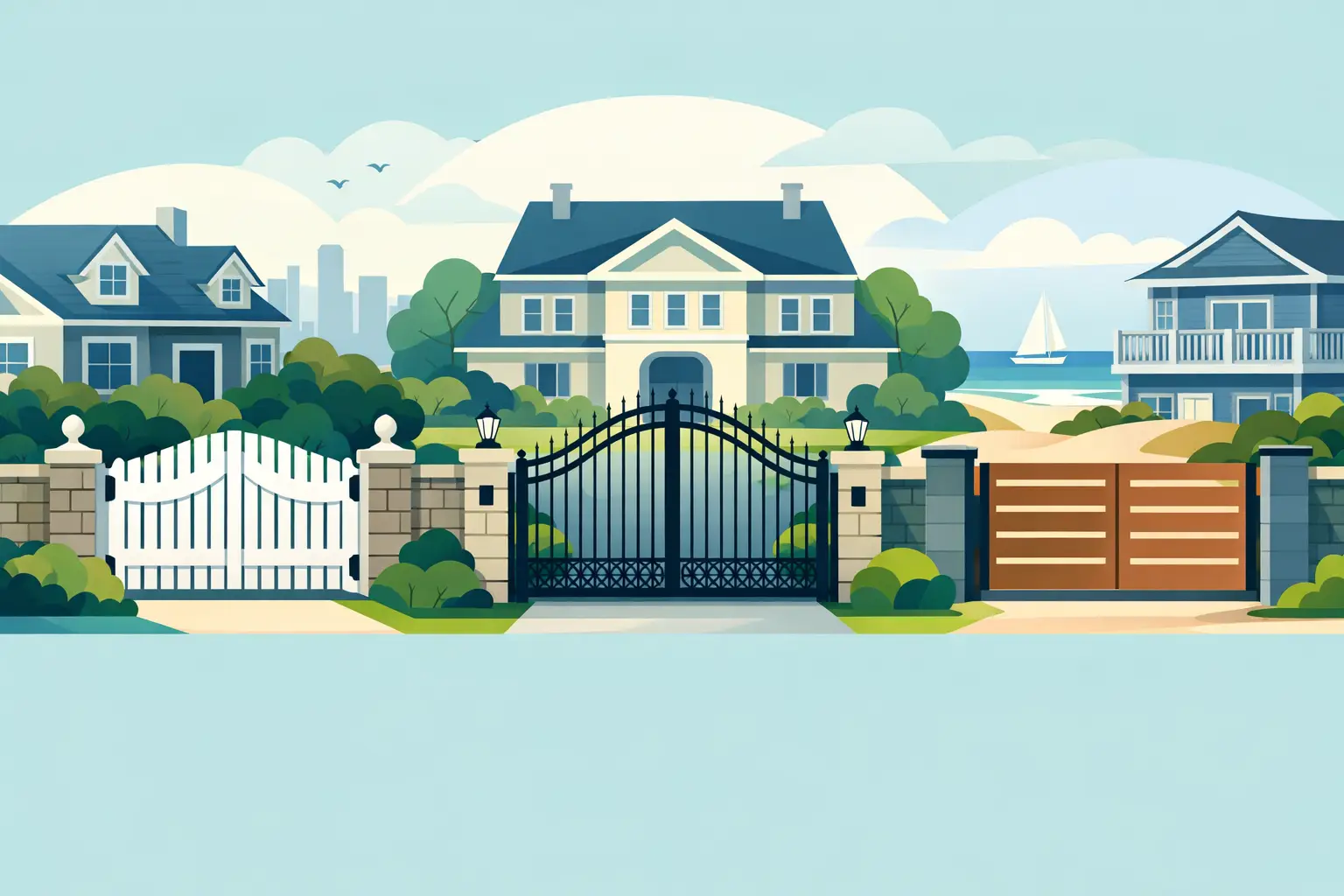
A gate is the one part of a fence your family, guests, delivery drivers, and pets interact with every day. That is why custom gate design options deserve more thought than simply matching the fence panels. The right gate should protect the space, operate comfortably, fit the grade of your yard, and look like it belongs on your property for years to come.
For New Jersey homeowners, a custom gate can solve everyday problems that standard sizes often miss: a narrow side yard, a sloped driveway, a pool enclosure, a wide equipment opening, or a dog that has learned how to test a basic latch. A good design starts with how you use the opening, then brings in material, style, hardware, and installation details.
Start with the Gate's Job
Before selecting a color or decorative top, consider what the gate needs to do. A pedestrian gate for taking out the trash has different requirements than a double gate for a riding mower or a driveway entrance that controls vehicle access.
A side-yard gate commonly needs privacy, easy one-handed operation, and a latch that is out of reach of small children. A backyard gate for pets needs tight spacing near the ground and hinges that will not sag under daily use. For commercial properties, the priorities may shift toward access control, wider clearances, visibility, and a gate frame built for frequent operation.
The width matters as much as the height. A gate that is too narrow becomes an annoyance every time lawn equipment, furniture, or a contractor needs to pass through. On the other hand, an oversized single gate can put unnecessary strain on posts and hinges. In many cases, a double gate is the more practical answer for wide openings.
Custom Gate Design Options by Material
The best material depends on the fence, the level of privacy you want, maintenance expectations, and the demands placed on the gate. Matching the surrounding fence creates a finished look, but a complementary material can also make sense when function calls for it.
Vinyl Gates for Privacy and Low Maintenance
Vinyl gates are a popular choice for enclosed backyards and side yards. They provide a clean, solid appearance without the regular staining or painting associated with wood. White remains a common choice, while tan, gray, and other shades can better suit certain home exteriors.
Because gates carry moving weight, proper reinforcement is especially important with vinyl. The frame, posts, hinge selection, and internal support should be designed for the gate's width and height. A vinyl gate can look simple from the outside while still needing careful structural work underneath.
Wood and Cedar Gates with a More Natural Look
Wood gates offer flexibility that homeowners often appreciate on older homes, landscaped properties, and projects where a standard panel size will not work. Cedar is valued for its natural character and resistance to decay, while pressure-treated pine can be a budget-conscious option for many projects.
A wood gate can be built as solid privacy fencing, shadowbox style, board-on-board, picket, or a framed gate with an arbor-style top. The trade-off is maintenance. Wood needs periodic attention to preserve its appearance and help it withstand New Jersey's changing weather. It can also expand, contract, and shift over time, so a well-built frame and strong posts are not optional.
Aluminum and Ornamental Iron for Visibility
Aluminum and ornamental-style gates provide a more open look while establishing a clear boundary. They work especially well around pools, front yards, gardens, and commercial properties where visibility matters. Aluminum is generally low-maintenance and will not rust like traditional iron, making it a practical choice for many residential applications.
Decorative details can include spear tops, flat tops, arched rails, rings, finials, or estate-style patterns. These features should fit the architecture of the home. A formal gate can add curb appeal to a colonial or brick property, while a cleaner, flat-top design may better suit a newer home.
Chain Link and Privacy-Slat Gates for Practical Access
Chain-link gates are often the right choice for secure, functional access at a fair price. They are common for pet runs, side yards, sports areas, construction sites, storage spaces, and commercial perimeters. Privacy slats can reduce visibility while keeping the practical benefits of chain-link fencing.
For a chain-link gate, gauge, frame size, mesh, and latch type all affect long-term performance. A light-duty walk gate and a wide commercial double gate should not be built to the same standard. The application should drive the design.
Composite Gates for a Polished Finish
Composite and Trex-style fencing can offer a refined appearance with less upkeep than natural wood. These systems are often selected for privacy-focused yards where homeowners want consistent color and a more contemporary finish. As with vinyl, a composite gate needs proper support because the gate is a moving section, not a stationary fence panel.
Choose the Right Configuration
Most residential custom gate design options come down to single swing, double swing, sliding, or specialty access gates. The correct configuration depends on available space, terrain, and how often the gate will be used.
A single swing gate is efficient for a typical walk-through opening. It can swing inward or outward, but the swing path must be clear and should not create a problem near sidewalks, steps, vehicles, or landscaping. For yards with a noticeable slope, gate clearance must be planned carefully. A gate that drags on the ground will quickly become frustrating and can damage the frame or hardware.
Double swing gates are useful for driveways and larger backyard openings. They can provide the clearance needed for trailers, lawn equipment, or service vehicles without asking one oversized leaf to carry all the weight. A drop rod or center stop may help keep the inactive leaf in place when the gate is closed.
Sliding gates are worth considering where swing space is limited or where a driveway layout makes swing gates impractical. They require room along the fence line and a properly prepared path or cantilever design. For automated driveway gates, safety devices, access controls, and professional installation are critical. Convenience should never come at the expense of safe operation.
Details That Make a Gate Last
A custom gate is only as dependable as its posts, frame, and hardware. This is where a project can look good on installation day but fail early if corners are cut.
Posts need to be sized and set for the gate's weight, width, and use. Wider gates often need heavier posts, deeper footings, and reinforced frames. In New Jersey, seasonal freeze and thaw cycles make proper post setting especially important. Gates that are hung on undersized or poorly set posts are more likely to sag, bind, or fall out of alignment.
Hinges should match the gate material and load. Self-closing hinges are a smart choice for many pool and pet-safety applications. Adjustable hinges can be helpful because they allow fine-tuning if minor movement occurs over time. Latches should be easy for adults to operate while providing the security your household needs.
For added control, homeowners may choose keyed locks, magnetic latches, coded access, or gate closers. A decorative handle can improve appearance, but it should not replace a dependable latch. When a gate protects a pool area or keeps children and pets contained, the closing and latching system deserves the same attention as the fence itself.
Design for Safety, Codes, and Real Life
Pool gates require special planning. Local regulations and code requirements can address fence height, gate self-closing action, latch placement, and other safety features. Requirements can vary by municipality and project conditions, so they should be verified before installation. A pool enclosure is not the place to rely on a generic gate design.
Pet owners should also look beyond the overall gate height. Check the gap beneath the gate, spacing between rails or pickets, and the latch location. Small dogs can slip through openings that seem harmless, while larger dogs may push on a gate repeatedly. If your dog jumps, digs, or leans against gates, say so during the design discussion. Those details affect the right solution.
For front gates and driveway entrances, consider visibility from the street and the path a visitor takes to reach the door. A beautiful gate that is awkward to open, blocks a walkway, or creates a blind spot is not doing the property any favors. The best designs balance privacy with practical access.
Make the Gate Feel Like Part of the Property
A custom gate should relate to the home, fence, and landscape without competing with them. Straight-top privacy gates suit many properties because they are clean and timeless. Arched tops, lattice accents, framed panels, decorative caps, and contrasting hardware can add personality when used with restraint.
Color also changes the feel of a gate. A white vinyl gate can brighten a traditional yard, while black aluminum provides definition without blocking views. Natural cedar can soften a heavily landscaped property. For commercial settings, a simple, durable design with clear access points usually makes the strongest statement.
At Northeast Fencing, LLC, the goal is to help local property owners choose a gate that works as hard as the fence around it. A careful site review can identify grade changes, clearance issues, post needs, and access requirements before those details become expensive problems.
The right gate should feel easy to use from the first day: it closes cleanly, latches securely, gives you the access you need, and adds confidence every time your family or customers come through it.