
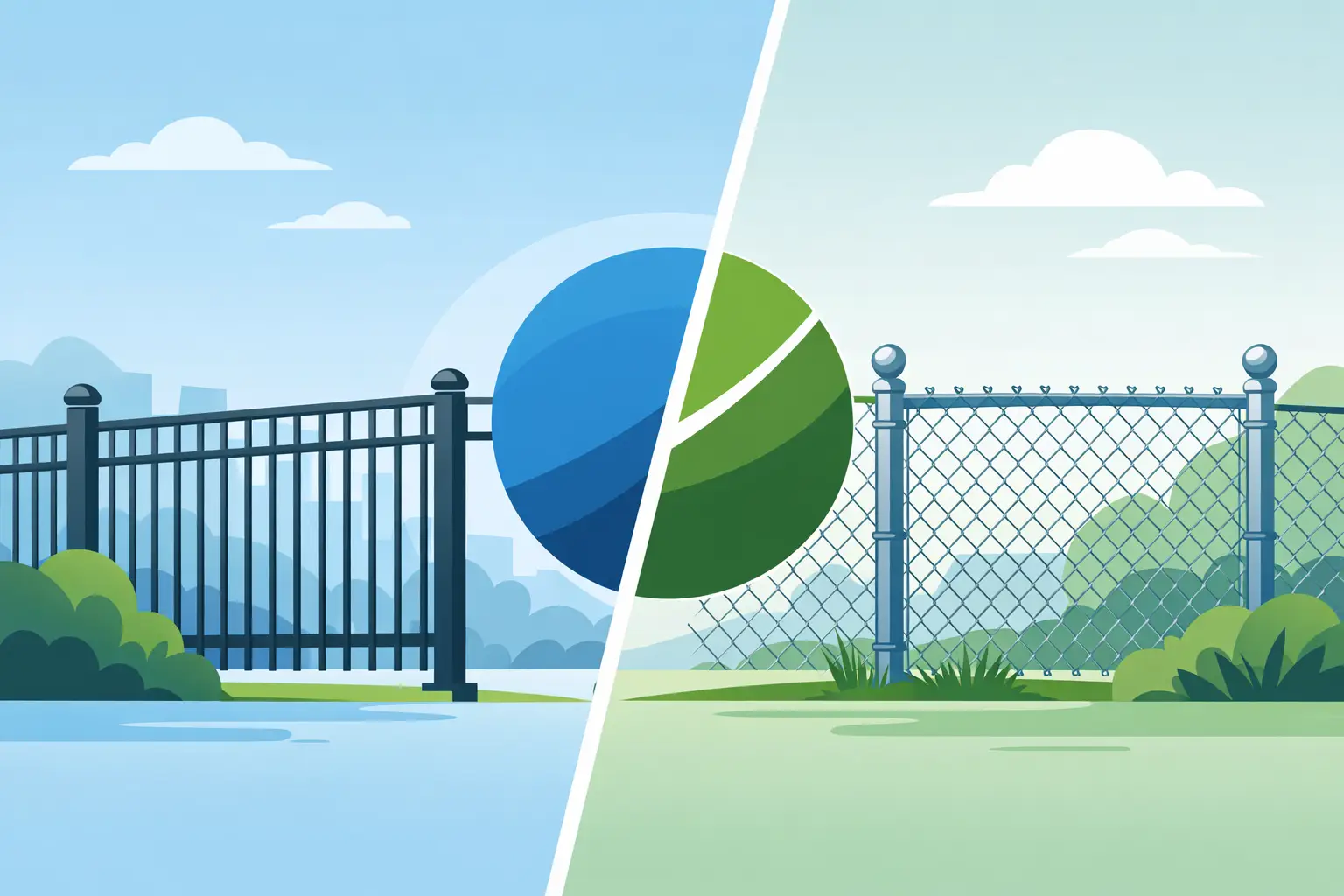
A fence can solve a real problem quickly: a dog that keeps testing the property line, a pool area that needs code-conscious protection, or a business lot that needs a clear boundary. When comparing aluminum vs chain link, the better choice is not always the one with the lower initial price. It is the one that matches what you need the fence to do for years after installation.
For New Jersey property owners, that decision often comes down to appearance, security, maintenance, budget, and how visible the fence will be from the street or patio. Aluminum and chain link are both durable options, but they serve very different purposes.
Aluminum vs Chain Link at a Glance
Aluminum fencing is a decorative metal fence made from powder-coated panels, posts, and pickets. It offers the open look of traditional wrought iron without the weight, routine painting, or rust concerns associated with iron. Homeowners often choose it for front yards, pools, gardens, patios, and properties where curb appeal matters as much as containment.
Chain-link fencing uses woven steel wire fabric attached to metal posts and rails. It is one of the most practical ways to enclose a large area, secure a backyard, protect equipment, or define a commercial property. Standard galvanized chain link has a familiar silver finish, while vinyl-coated versions offer black, green, or brown color options.
Both can last for many years when installed correctly. The difference is that aluminum is usually chosen for its finished appearance, while chain link is chosen for its value and functional strength.
Appearance and Curb Appeal
This is where aluminum has a clear advantage for many residential projects. Its clean lines, black finish, and ornamental picket design complement brick, siding, stone, and landscaped yards without making a property feel closed in. Because it is open, it preserves views of a garden, wooded area, or pool while still creating a defined boundary.
Aluminum is especially popular around pools. It gives homeowners a polished look while allowing clear sightlines to children and guests in the water. Many aluminum styles can also be selected with flat-top, spear-top, puppy-picket, or tighter-bottom-rail designs to suit the property and the household.
Chain link is more utilitarian. That does not mean it has to look out of place. Black vinyl-coated chain link can blend nicely into a backyard, particularly near trees, sports areas, or less visible side and rear property lines. Privacy slats can reduce visibility, although they change both the look and airflow of the fence.
For a prominent front yard, a patio-facing boundary, or a pool enclosure, aluminum usually delivers more curb appeal. For a large backyard where the main goal is dependable containment, chain link may be the more sensible investment.
Cost Depends on More Than Material
Chain link generally costs less than aluminum, especially for long fence runs. That makes it a strong option when a homeowner needs to fence a wide yard or a commercial owner needs to secure a large perimeter without stretching the budget.
Aluminum has a higher upfront cost because of the material, panel design, and decorative hardware. It can still be a smart long-term purchase for homeowners who want to avoid repainting and want a fence that supports the overall value and appearance of the property.
The final installed price for either fence depends on more than the footage. Grade changes, difficult soil, old fence removal, gate size, post depth, corner locations, and local permit requirements can all affect the scope of work. A yard with a steep slope or multiple gates requires more planning than a straight run along a level property line.
It is also worth comparing the right versions of each product. Basic galvanized chain link and black vinyl-coated chain link are not priced the same. Standard residential aluminum and heavier commercial-grade aluminum are different systems as well. An accurate quote should account for the fence height, gate configuration, layout, and intended use instead of relying on a one-size-fits-all price.
Security, Safety, and Containment
Chain link is often the better choice when physical security is the main concern. Its woven steel fabric is difficult to push through, and it can be built in taller heights for commercial lots, storage yards, utility areas, athletic facilities, and other security-focused applications. It also works well with practical gate systems for driveways and service access.
For homes with dogs, chain link is a reliable enclosure when selected at the proper height and installed with attention to the bottom of the fence. A determined digger may need additional measures at ground level, but the fence itself provides a strong, continuous barrier.
Aluminum is excellent for defining a yard, protecting a pool area, and keeping children or most pets inside a designated space. However, its open picket design may not suit very small pets that can fit through standard spacing. It also may not be the best option for dogs that climb or jump against fencing. In those cases, a puppy-picket style, a taller aluminum fence, or chain link may be a better fit.
For pool projects, safety rules matter as much as material. Self-closing, self-latching gates, required fence heights, latch placement, and local code requirements should be considered before installation begins. A professional installer can help determine a layout that works for daily use while addressing the safety details that should not be left to guesswork.
Maintenance and New Jersey Weather
Aluminum is one of the lowest-maintenance fence options available. Its powder-coated finish is designed to resist rust, peeling, and fading. Occasional rinsing with water is usually enough to remove dirt, pollen, and road salt residue. If a panel is damaged by a fallen branch or vehicle impact, it can often be replaced without rebuilding the full fence line.
Chain link is also low maintenance, particularly when it is galvanized or vinyl-coated. Galvanized steel is made to resist corrosion, though scratches, coastal exposure, and years of weather can eventually create areas that need attention. Vinyl-coated chain link adds another layer of protection and gives the fence a less industrial appearance.
Neither material needs the regular staining or painting associated with wood fencing. Still, installation quality matters. Posts need to be set correctly, gates need to be aligned, and fence lines need to follow the terrain properly. A durable material cannot make up for shallow posts, loose hardware, or a gate that was not built for the opening.
When Aluminum Is the Better Choice
Aluminum is usually the right fit when the fence will be highly visible and you want it to add to the property rather than simply mark the edge of it. It works particularly well for pool fencing, front-yard boundaries, decorative backyard enclosures, and homes where an open view is part of the appeal.
Choose aluminum if your priorities include a refined appearance, low maintenance, and a fence that complements landscaping and architecture. It is also a good option when privacy is not the main goal. Because it does not create a solid wall, it keeps outdoor areas feeling open.
Keep in mind that aluminum is not designed to provide complete privacy. If privacy is essential, consider a vinyl, wood, composite, or privacy-slat chain-link solution instead of expecting an ornamental metal fence to do a job it was not built to do.
When Chain Link Is the Better Choice
Chain link makes sense when coverage, security, and budget come first. It is a dependable choice for dog runs, large backyards, side-yard boundaries, commercial perimeters, playground areas, and practical enclosures where the fence needs to work hard without demanding a premium decorative finish.
Choose chain link if you need to enclose substantial footage efficiently, want a strong barrier for pets, or need a taller fence for a business property. Black vinyl-coated chain link is often the middle ground for homeowners who want chain link's function with a more finished appearance.
Privacy slats can help if neighbors are close, but they are not identical to a solid privacy fence. They reduce visibility rather than fully eliminate it, and wind can still move through the fence. That can be an advantage in exposed yards where a solid panel fence would catch more wind.
The Right Fence Starts with the Right Plan
Before selecting a material, think about the day-to-day use of the space. Where will gates be needed? Does a mower, pool service technician, delivery vehicle, or commercial crew need access? Are there pets that dig, climb, or slip through narrow openings? Is the fence meant to be seen from the street, or mainly to secure a rear property line?
Property surveys, utility locations, local rules, and neighbor communication should also be handled early. A well-planned fence avoids costly changes after posts are already in the ground. For more than 17 years, Northeast Fencing, LLC has helped New Jersey homeowners and businesses make these decisions with clear recommendations and workmanship built for the long run.
The best next step is to walk the property with a fencing professional and explain how you want the space to function. A good recommendation should account for your budget, your safety needs, and the way you want to enjoy the yard after the installation is complete.